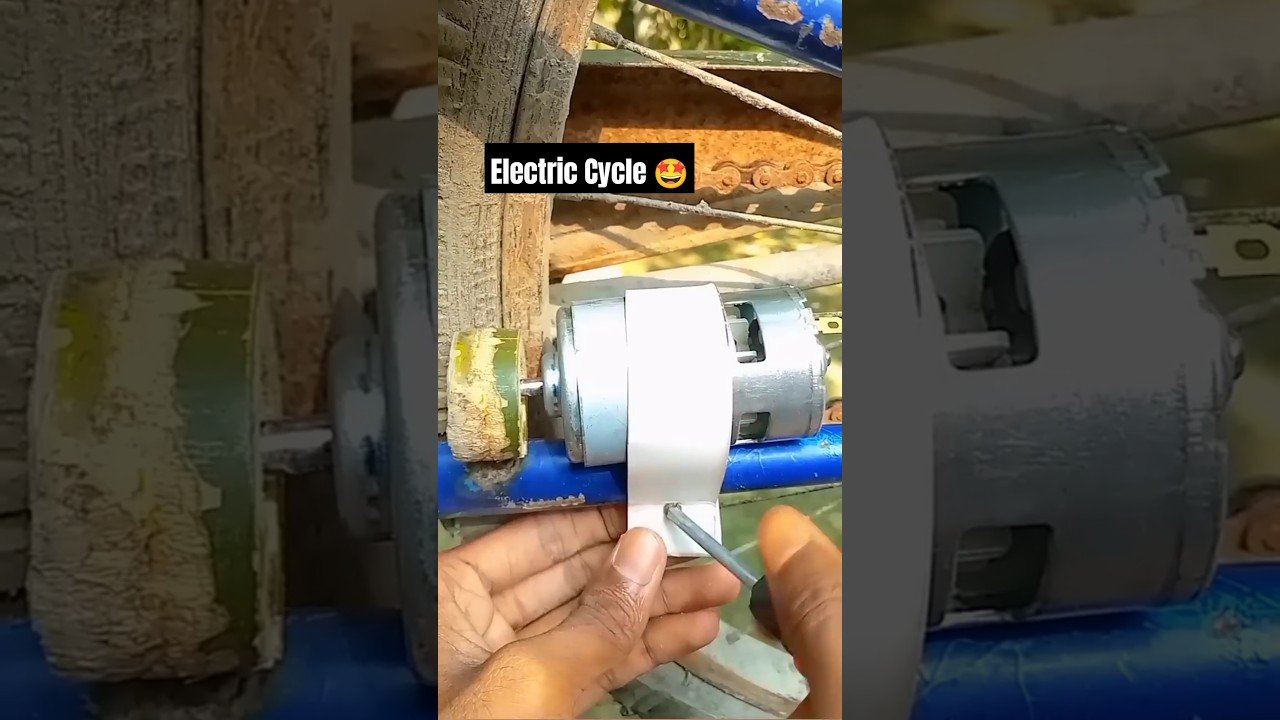
Electric Cycle Without Battery: How the Light Works
Electric cycle without battery is the core idea shown in Bitu Experiment’s YouTube Short, where the bicycle’s movement appears to power a light directly from wheel motion rather than from a conventional rechargeable pack. At 0:00, the creator presents a visual experiment, not a full electric bicycle review, and that distinction matters if you’re comparing this clip with YouTube search results for an e-bike buying guide or commercial electric bike reviews.
According to Bitu Experiment, the setup demonstrates that a cycle light can work without a standard battery if rotational energy is converted into electricity. You can watch the original video here: Electric Cycle 🚨 | Cycle Light Making Without Battery, and browse the creator’s channel here: Bitu Experiment on YouTube. As demonstrated in the video, the concept is simple and visually effective, but the clip does not verify output power, lumen rating, durability, waterproofing, or road safety.
The main takeaway is straightforward: an electric cycle without battery for lighting is possible as a small-scale generator project, but that is not the same thing as a modern electric bicycle or e-bike. A road-going e-bike usually depends on a lithium-ion battery, motor controller, charging port, and either pedal assist or throttle control. Lighting may need only a few watts, while propulsion often needs hundreds. That gap is huge.
The video confirms only the visible concept at 0:00: wheel motion can be used to illuminate a lamp. It does not confirm wattage, top speed, range, charging time, component brand, independent test results, or compliance with regional laws. In 2026, those missing details are exactly what you should look for before copying a project or buying any bike marketed as electric.
- Generator principle: motion can be turned into electricity for a small light.
- Energy trade-off: the rider supplies the power through pedaling, so resistance may increase.
- Practical limits: no verified brightness, weather rating, or wiring diagram is provided.
- Big difference: a DIY light project is not the same as a road-legal e-bike with motorized assistance.

How an Electric Cycle Without Battery Generates Light
The most likely explanation is a small dynamo or generator driven by wheel rotation. As demonstrated in the video at 0:00, the bicycle moves, the rotating wheel provides mechanical input, and that motion appears to produce enough electrical output to illuminate a lamp. The creator explains the effect visually, but the Short does not identify the exact hardware, voltage, or current rating.
That energy chain usually works in four steps. First, the tire or wheel turns. Second, a generator converts that mechanical rotation into electrical energy, often through magnets and coils. Third, a rectifier or simple regulator may smooth the output if the lamp needs more stable current. Fourth, the LED or bulb converts electricity into visible light. A classic bicycle dynamo system often operates around 6 volts and roughly 3 watts for lighting, which shows why this type of setup can handle illumination but not full motor propulsion.
An electric cycle without battery sounds effortless, but the energy still comes from you. If the wheel drives a generator, you may feel extra drag, especially at lower cadence or on climbs. That’s the trade-off. By contrast, an e-bike uses stored battery energy, often from a 36V, 48V, or even higher-voltage system, to support the rider through a motor and controller.
Before you copy any electric cycle without battery project, ask practical questions:
- Is the generator mounted securely enough to avoid rubbing or slipping?
- Does the light stay bright at 5 km/h, 10 km/h, and 20 km/h?
- Is there any protection from rain, loose wires, or voltage spikes?
- Could exposed wiring contact the tire, spokes, or frame?
The safer route is to use a commercially rated bicycle dynamo or certified bike-light component instead of experimenting with exposed wires near a moving wheel. The video shows the idea clearly, but according to Bitu Experiment, it remains an experiment rather than a complete wiring tutorial with serviceable parts documentation.
Battery-Free Cycle Light vs Electric Bicycle and E-Bike Systems
A battery-free cycle light and an e-bike solve very different problems. The first creates a small amount of electricity while the bike is moving, mainly for lighting. The second stores energy in a lithium-ion battery and uses that energy to power a motor for propulsion. So while the Short shows an inventive electric cycle without battery concept, it does not establish a functional electric bicycle in the way riders usually mean it.
Modern e-bike systems include parts that are absent, or at least not verified, in the video: a hub motor or mid-drive motor, motor controller, battery management system, charging port, display, pedal-assist sensor, and sometimes throttle control. Even entry-level commuter models commonly use motors rated around 250W to 750W. By contrast, many bicycle lights work in the 2W to 10W range. That power difference explains why a wheel generator can light a lamp but usually can’t provide practical propulsion.
Battery capacity is measured in watt-hours (Wh), calculated as volts × amp-hours. For example, a 36V 14Ah battery stores about 504Wh. If a motor averaged 250W, that pack could theoretically support about hours of output before losses and riding conditions are considered. A wheel generator that only powers a small lamp is operating at a tiny fraction of that energy level. That’s why an electric cycle without battery can be a neat lighting project without being a substitute for an e-bike.
| System | Power source | Riding assistance | Maintenance | Range | Charging |
|---|---|---|---|---|---|
| Video light concept | Wheel-driven generator | None for propulsion | Wire and mount checks | Only while moving | Not applicable |
| Hub-motor e-bike | Lithium-ion battery | Pedal assist and/or throttle | Motor, battery, brakes | Often 30-80 km | Usually 3-7 hours |
| Mid-drive e-bike | Lithium-ion battery | Strong climbing assistance | Drivetrain wear can be higher | Often 40-100 km | Usually 3-7 hours |
| E-bike conversion kit | Battery plus added motor | Varies by kit | Depends on installation quality | Varies widely | Battery charging required |
The video shows creativity. It does not show measured commercial performance, certified safety, or a valid comparison with full e-bike systems.
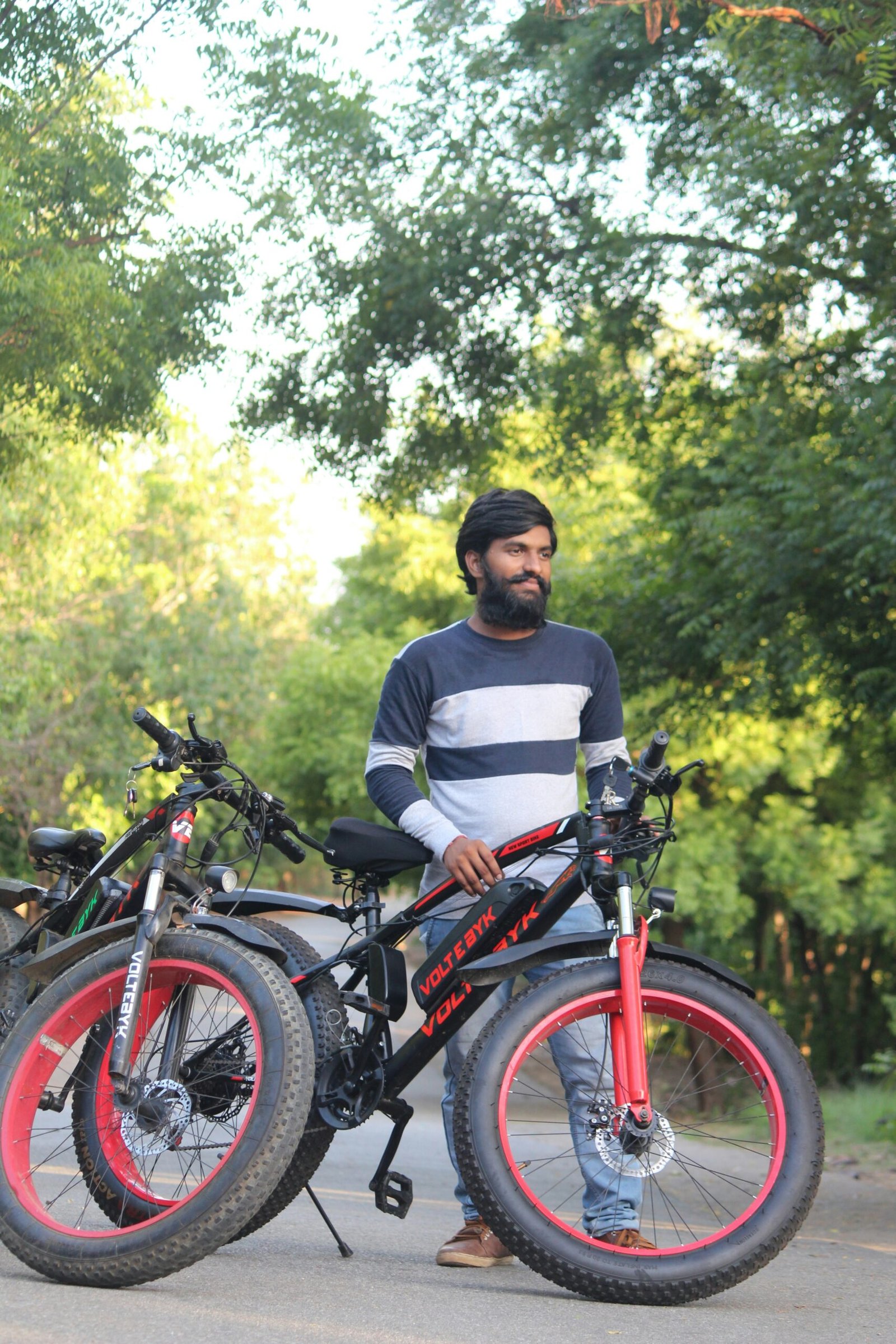

Choosing an E-Bike: Motor, Battery, Range, and Controls
If the Short got you interested in powered cycling, your next step is to separate a visual experiment from a practical buying decision. A real e-bike purchase should start with the motor. A hub motor is usually simpler, often cheaper, and commonly found on commuter e-bikes and folding electric bikes. A mid-drive motor sits near the crank, usually improves weight distribution, and can climb better because it works through the bicycle’s gears.
Battery size matters just as much. Look at battery capacity in watt-hours (Wh), not just voltage. Packs around 360Wh may suit short city trips, while 500Wh, 625Wh, and 750Wh packs are common when you need longer range or heavier loads. Real-world range changes with rider weight, cargo, tire pressure, wind, temperature, hill grade, assist level, and stop-start traffic. A brand may advertise 100 km, but your commute could deliver 45 km if you ride fast with high assist on steep roads.
The controls also change the riding feel. Pedal assist adds power when you pedal. Throttle control can move the bike without continuous pedaling where local law permits. Meanwhile, a torque sensor measures how hard you push on the pedals and usually feels smoother and more natural than a cadence sensor, which responds mainly to pedal rotation. If you’ve been watching an electric cycle without battery clip and thinking all bike electrification is simple, this is where the real complexity starts.
Use this checklist before buying:
- Motor power: check nominal and peak output.
- Battery watt-hours: compare stored energy, not marketing slogans.
- Claimed vs real-world range: ask how and where it was tested.
- Top speed: verify assisted speed and legal classification.
- Charging time: many packs need roughly to hours.
- Total weight and payload: heavy bikes can exceed kg, some cargo models far more.
- Warranty and replacement parts: battery availability matters after year or 3.
An electric cycle without battery for lighting can teach energy basics, but it won’t answer the questions that actually determine daily e-bike satisfaction.
E-Bike Types and Objective Model Comparisons
You’ll see five categories repeatedly in YouTube search results, electric bike reviews, and buying guides: commuter e-bike, mountain e-bike, folding electric bike, cargo e-bike, and electric road bike. Each serves a different rider. Commuters need reliability, lights, fenders, and rack support. Mountain riders care about torque, traction, suspension, and brake control. Folding models prioritize storage in apartments or trains. Cargo bikes need high payload ratings and stable frames. Road-bike buyers often want lower weight and efficient handling.
To compare any model objectively, use the same fields every time. Record motor location, nominal power, battery size in Wh, measured real-world range, bike weight, maximum payload, price, warranty length, brake type, service network, and how easy battery or motor replacement will be after a few years. This is where many video reviews fall short. They praise acceleration or styling but skip repairability and replacement-part support.
A good comparison sheet should also log the publication date, creator expertise, route details, rider weight, cargo weight, weather, tire pressure, assist mode, hill grade, and whether the range test ended at full shutdown or at 10% battery remaining. That level of sourcing gives you something useful. According to Bitu Experiment, the Short at 0:00 is an experiment. It should not be used as evidence for commercial performance in the same way you’d assess a commuter e-bike or cargo bike.
If you came from an electric cycle without battery search, remember the gap in purpose. A visual demo can inspire curiosity, but it doesn’t tell you whether a folding electric bike weighs 19 kg or 29 kg, or whether a mountain e-bike keeps power on a 12% grade. An electric cycle without battery light concept is creative. Model comparison demands repeatable data.
Testing an E-Bike Beyond YouTube Claims
If you want honest buying advice, test methods matter more than bold thumbnails. Use one rider, one route, the same tire pressure, the same assist mode, and as close to the same weather as possible. For range testing, log distance, elevation gain, average speed, temperature, wind, rider weight, cargo weight, and remaining battery percentage. Repeat the route at least twice. One ride can mislead you.
For braking, measure stopping distance from a fixed speed such as 25 km/h on dry and wet pavement. Then inspect brake fade, tire grip, rotor temperature, and control stability. Hydraulic disc brakes deserve close attention because they’re common on faster or heavier e-bikes, especially cargo models and mountain e-bikes. A brake setup that feels fine on a kg road bike may feel inadequate on a kg cargo machine carrying groceries or a child seat.
Hill tests should record grade percentage, climb distance, assist setting, motor temperature, and whether the rider is contributing real effort. A 500W label alone doesn’t guarantee better climbing than a well-tuned mid-drive with lower nominal output. For commuting, assess lighting, rack compatibility, fenders, lock mounting, charging convenience, maneuverability, and whether you can carry the bike up stairs or onto public transport.
Why mention this in an article about an electric cycle without battery? Because the Short is a good reminder that videos often show what is possible, not what is proven. An electric cycle without battery experiment can be visually clear at 0:00, but buying decisions should rest on repeatable tests, not impressions alone.
E-Bike Battery Safety, Charging, and Recycling
The battery-free light idea in Bitu Experiment’s Short avoids one major issue that every full e-bike owner must manage: lithium-ion battery safety. A proper e-bike pack stores far more energy than a small generator light setup, so charging and storage deserve routine care. Use the original charger whenever possible. Stop using a pack immediately if it becomes swollen, cracked, unusually hot, leaks, or shows damage after a crash.
A practical charging routine is simple but strict:
- Place the battery on a hard, nonflammable surface.
- Keep it away from bedding, paper, curtains, solvents, and exit routes.
- Stay nearby while charging rather than leaving it unattended overnight.
- Unplug it when the manufacturer says charging is complete.
- Never use a mismatched or damaged charger.
Storage matters too. Avoid extreme heat, direct sun, and freezing conditions. Keep the battery dry. Store it at the maker’s recommended charge level, often around 30% to 80% for longer-term storage, and never bypass the battery management system. Capacity also degrades over time. A pack sold at 500Wh may deliver less usable energy after repeated cycles, heat exposure, age, or deep discharges.
An electric cycle without battery setup may seem simpler because it skips charging entirely, but that doesn’t make it a replacement for battery-powered transport. If you own an e-bike, review this safety resource from the U.S. Consumer Product Safety Commission micromobility guidance. Also follow local recycling instructions and never put lithium-ion packs in household trash. The creator explains a neat experiment; the real-world responsibilities of e-bike ownership go much further than an electric cycle without battery light demonstration.
Regional E-Bike Rules, Speed Limits, and Riding Locations
E-bike rules vary by country, state, province, and city, so never assume a bike is legal everywhere because a seller says so. Before riding, check class definitions, motor power limits, assisted speed limits, throttle rules, helmet requirements, age minimums, licensing, registration, and insurance obligations. This matters whether you’re buying a commuter e-bike, installing an e-bike conversion kit, or comparing electric bike reviews on YouTube.
In parts of the United States, the common framework uses three classes. Class 1 bikes are pedal-assist only. Class 2 bikes include throttle assistance. Class 3 bikes are faster pedal-assist models. But local law still decides where each class can go. A bike may be legal on roads yet banned from certain multi-use paths, sidewalks, mountain trails, or public transport systems.
The battery-free light in Bitu Experiment’s Short does not change vehicle classification. If a bike has a motor that exceeds local output or assisted-speed limits, adding an electric cycle without battery lighting system won’t make it compliant. Legal status may depend on motor behavior, top assisted speed, throttle function, required equipment, and how the vehicle is categorized by local transport rules.
Use this pre-purchase checklist before spending money:
- Search your local transport authority website.
- Save the exact regulation or PDF for your area.
- Ask the seller for compliance documentation.
- Verify whether aftermarket parts change the legal category.
- Check where that specific class may be ridden.
If your interest started with an electric cycle without battery video, that curiosity is useful. Just don’t confuse a clever lighting experiment with the legal obligations that come with a full e-bike.
Fit, Accessibility, and Everyday E-Bike Usability
Fit affects safety more than many first-time buyers realize. Start with your inseam, then check standover clearance, saddle adjustment, handlebar reach, and whether you can cover the brake levers without stretching. Frame labels like small, medium, and large aren’t enough by themselves because geometry varies across brands. A cm difference in standover height or a mm difference in reach can change confidence a lot, especially in stop-start traffic.
Accessibility features matter too. Older adults and riders with mobility needs often benefit from low-step frames, stable geometry, walk-assist mode, easy-to-read displays, ergonomic grips, gentle-start settings, and predictable pedal assist. Total weight is another major issue. A bike that weighs 18 kg feels very different from one that weighs 30 kg, especially if you must lift it over a curb or guide it into storage. A removable battery can reduce lifting weight by several kilograms.
Sensor choice affects comfort. A torque sensor usually delivers smoother help because it responds to how hard you push, while a cadence sensor may feel more abrupt because it activates once the pedals start rotating. Riders carrying children, groceries, or work tools should also confirm a verified payload rating and a stable kickstand design before buying.
Control checks are practical: Can you mount without twisting? Can you operate the display with gloves? Can you safely reach assist buttons while moving? As demonstrated in the video at 0:00, an electric cycle without battery light setup may be lightweight and simple, but it does not solve the stability, stopping, transport, and propulsion needs that define everyday e-bike usability. An electric cycle without battery experiment is interesting; a comfortable bike fit is what keeps you riding.
DIY Electric Cycle Projects and Conversion Kits
Bitu Experiment’s Short is a good example of how DIY curiosity starts: you see a simple effect and want to build something yourself. That’s a healthy instinct. But a battery-free light project is much simpler than converting a bicycle into a functioning electric bicycle. Once propulsion enters the picture, you’re dealing with torque loads, battery mounting, brake performance, cable routing, legal classification, and long-term repairability.
A typical e-bike conversion kit includes a motor, battery, controller, display, wiring harness, brake cut-off sensors, torque sensor or cadence sensor, throttle where legal, mounting hardware, and a charger. Before buying, inspect the frame and fork carefully. Then follow a planning sequence:
- Check frame and fork condition for cracks, corrosion, and axle compatibility.
- Select motor type: hub motor or mid-drive, based on the bike and your terrain.
- Calculate battery needs in Wh for your expected range and payload.
- Confirm brake compatibility, especially if upgrading to faster speeds.
- Plan cable routing to avoid moving parts, pinch points, and weather exposure.
- Secure the battery mount and add protective hardware where needed.
- Test at low speed in a controlled area before road use.
Avoid overloaded forks, unsupported wiring, cheap connectors, and packs with unclear documentation. Professional installation is smart when compatibility is uncertain. Compared with buying a complete bike, a conversion kit can lower upfront cost and allow customization, but it can also complicate warranty claims and handling. If your interest began with an electric cycle without battery Short, keep perspective: an electric cycle without battery light demo is a useful inspiration point, not proof that a full DIY conversion will be simple or safe.
Conclusion: What to Do After Watching Bitu Experiment’s Video
The clearest lesson from Bitu Experiment’s Short is that bicycle motion can generate enough electricity to power a small light. That’s the value of the video. As demonstrated in the video at 0:00, the experiment makes an invisible principle easy to see. Still, the creator explains a concept, not a complete transport system, and that difference should guide your next step.
If you’re curious about building a similar setup, start small and stay safe. Use rated bicycle dynamo parts, protect wiring from the tire and weather, and test brightness at different speeds before riding in traffic. If you’re actually shopping for an electric bicycle or e-bike, shift your attention to motor type, battery capacity, range testing, charging time, brake quality, fit, accessibility, local laws, and battery safety. Those are the details that determine whether a bike works for commuting, cargo, hills, or daily recreation.
One last reality check helps: an electric cycle without battery light project is about small-scale generation. A real e-bike is about stored energy and controlled propulsion. Treat the Short as inspiration, use transparent data when comparing models, and verify claims before you buy or build. That approach will serve you much better than assuming every bike-related YouTube clip answers the same question.

Key Takeaways
- Bitu Experiment’s video shows that bicycle motion can generate electricity for a small light, but it does not prove the performance of a full electric bicycle.
- A battery-free lighting setup and a modern e-bike are fundamentally different: one creates limited power while moving, the other stores energy in a lithium-ion battery for motorized assistance.
- Before buying or building an e-bike, compare motor type, battery watt-hours, real-world range, braking performance, repairability, and local legal requirements.
- Battery safety matters far more on full e-bikes than on simple generator-light projects, so use the correct charger, inspect packs regularly, and recycle them properly.
- Use YouTube experiments for inspiration, but rely on transparent testing data and local regulations when making real riding or purchasing decisions.
Frequently Asked Questions
Can a bicycle light really work without a battery?
Yes. If a dynamo or small generator produces electricity while the wheel turns, a light can work without a conventional battery. The video at 0:00 shows that concept visually, but it does not state the exact generator rating, wattage, or brightness output.
Does an electric cycle without battery count as an e-bike?
Usually no. A battery-free light project does not provide motorized propulsion by itself, so it should not be confused with an electric bicycle or e-bike that uses a motor, controller, and battery system.
Is a hub motor or mid-drive motor better?
A hub motor is often simpler, less expensive, and common on commuter models. A mid-drive motor usually offers better hill performance and weight distribution because it works through the bike’s gears, so the better choice depends on terrain, budget, and repair access.
How much battery capacity does an e-bike need?
That depends on distance, terrain, rider weight, cargo, assist level, and weather. Compare watt-hours rather than marketing claims alone, and remember that a 500Wh pack can feel very different in flat city riding than on steep hills with heavy loads.
Are hydraulic disc brakes necessary on an e-bike?
They are often a strong choice for heavier, faster, or cargo-focused e-bikes because they usually provide better modulation and more consistent stopping. Correctly adjusted mechanical brakes may still be adequate for lighter, lower-speed use, but braking performance should always be tested realistically.
What should I check before buying an e-bike?
Verify legal classification, motor type, battery watt-hours, real-world range, top speed, charging time, weight, payload, warranty, service access, and replacement battery availability. Also check fit, brake quality, and whether local rules allow throttle use or restrict where the bike can be ridden.
Can I ride an e-bike on any cycle path?
No. Permitted riding locations vary by jurisdiction and may depend on the bike’s class, assisted speed, throttle function, and local trail or path rules. Always confirm regional regulations before riding.
Where can I find more demonstrations from Bitu Experiment?
You can start with the original Short at https://www.youtube.com/watch?v=ksgvNyTuy44 and the channel page at https://www.youtube.com/@BituExperiment. The channel’s experiment format is useful for inspiration, but it is not a substitute for controlled e-bike testing or detailed buying guidance.