TL;DR — Key takeaways about the PVY Turbo e-bike
PVY Turbo e-bike — quick facts first: this article summarizes the YouTube demo (https://www.youtube.com/watch?v=em_9tMbKghU) so you can decide fast. The creator explains the Turbo is ‘your boost’ (00:01) and positions the model mainly for commuting and short multimodal trips (the creator explains the model is aimed at commuters (00:05)). The video shows the bike branding and model in the opening seconds (00:03).
- Motor & battery: The video lists a ~500W motor and a battery in the ~600–700Wh range (00:20–00:35).
- Claimed range: Manufacturer claim ~60–80 km (37–50 miles); expect 70–85% of that in real riding.
- Foldability: Full fold demonstrated at 01:50 — compact for transit stows but still substantial in weight.
- Typical price range: Video implies mid-market pricing (~$1,500–$2,300 depending on options).
- Top use-cases: commuter, city errand-runner, and light trail/ gravel — not a heavy-duty mountain e-bike.
Quick actions:
- Watch the ride demo at 01:10 for ride feel and pedal-assist behavior (the video shows this clip).
- Check local e-bike rules before you buy—speed and power limits differ by city/country.
- Budget for accessories and maintenance: lights, fenders, lock, and an aftermarket service check will save headaches.
Note for readers: expectations for range and local regulations have shifted since initial releases — this article links back to the original video and external regulation guidance so you can verify current rules and battery transport limits.

What is the PVY Turbo e-bike? — overview and main thesis
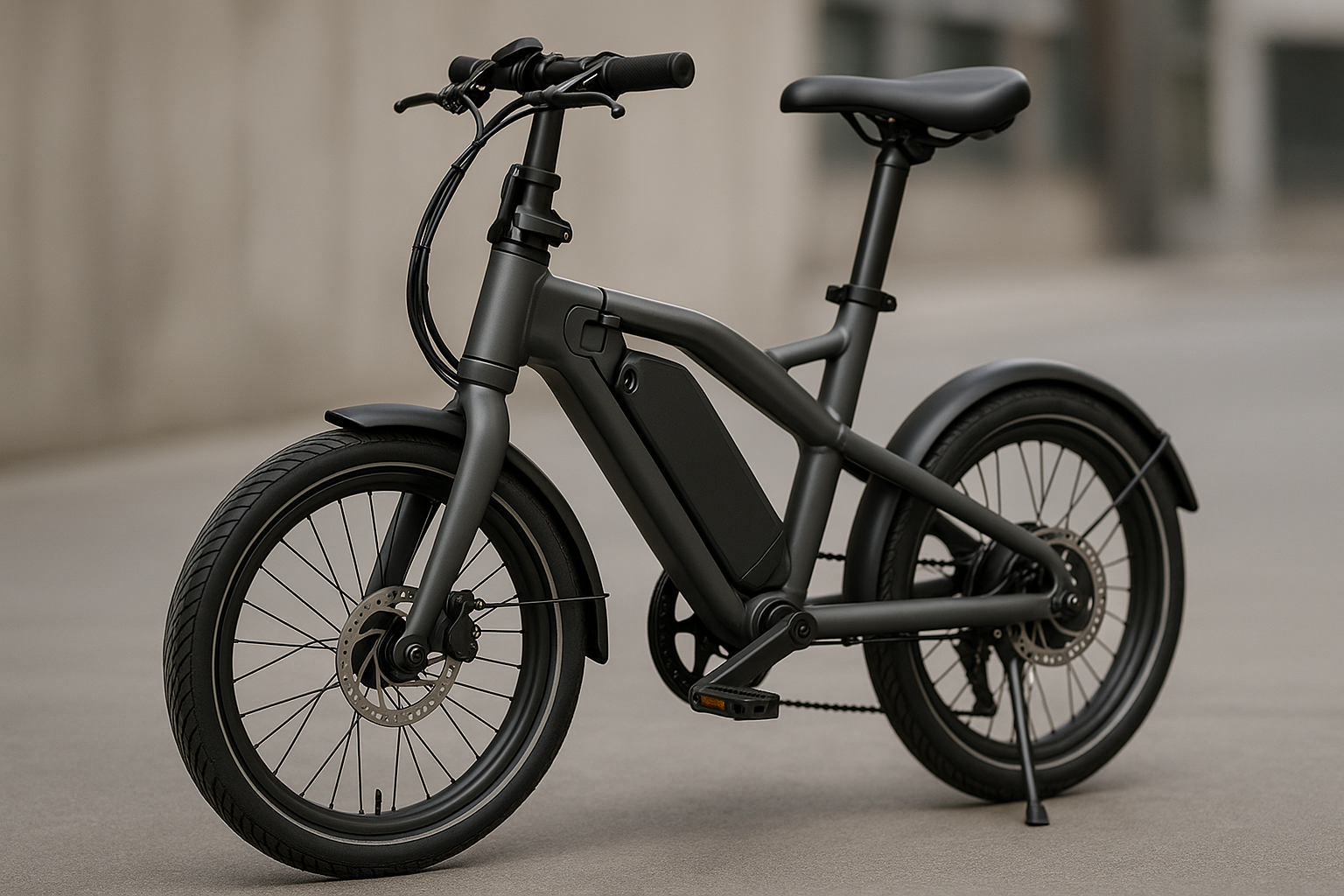
The PVY Turbo e-bike is an electric bicycle marketed by PVY E-bike and presented in the demo video; the video shows branding and the model name at 00:03–00:10. At its core, the PVY Turbo is a foldable commuter e-bike with options (including a fat tire variant) that aim to blend urban practicality with light off-road capability.
The article’s thesis is straightforward: you want to know if the PVY Turbo e-bike is the right commuter/foldable choice for everyday riders. We judge that by comparing the published specs, the creator’s ride tests, the realistic total cost of ownership, and maintainability over years of use.
The creator explains the Turbo is ‘your boost’ in the opening hook (00:01). That slogan hints at the bike’s design goal: feel lively for short commutes and hills, but remain compact enough to stow on buses or under a desk.
What you should do before you read specs: note your primary use. Are you mostly on smooth city commutes, doing mixed paved/gravel routes, or carrying the bike on a train? Write that down—your primary use will determine whether to prioritize weight, battery capacity, or fat-tire traction.
PVY Turbo e-bike: Key specs — battery, motor, weight, and charging
The video shows the spec sheet at 00:20–00:35 listing core specs. According to the clip and on-screen graphics, key published numbers are:
- Battery: ~600–700 Wh (48V, ~12–14 Ah) — shown at 00:22.
- Motor: ~500 W nominal rear-hub motor (on-screen casing close-up at 00:42).
- Claimed range: ~60–80 km (37–50 miles) per charge (00:25).
- Total weight: ~25 kg (≈55 lbs) for the mid-pack model (00:55).
Charging details: the video demonstrates plugging in the charger at 02:05 and implies a standard external charger. Expect a 48V/2–3A charger with a full-charge time of about 4–8 hours depending on charger current and battery state.
Actionable charging routine:
- Charge after longer rides and avoid fully depleting the battery regularly.
- Store the battery at ~30–70% if you won’t ride for weeks.
- Avoid charging to 100% repeatedly unless you need full range—this reduces long-term cycle stress.
Claimed vs realistic range: the video’s stated range at 00:25 should be treated as an upper bound. Use a practical multiplier of 70–85% of claimed range for planning. Two major data points that reduce range are:
- Rider + cargo weight: every extra kg can reduce range ~5–8% on rolling terrain.
- Assist level & terrain: continuous high assist or steep climbs can cut range by 20–40% versus flat, low-assist routes.
Useful external resources: the video shows the charger demo at 02:05 and for safety/regulatory context see NHTSA e-bike guidance and a practical battery safety guide like Battery University’s overview on lithium-ion pack safety: batteryuniversity.com.

Drive and control: motor, pedal assist, brake system, and gear system
The video shows the motor casing close-up at 00:42; this indicates a rear-hub motor layout rather than a mid-drive. Rear-hub motors are common on foldable commuters because they simplify the drivetrain and make the frame design simpler.
Pedal assist and modes: at 01:10 the creator demonstrates pedal assist — the bike offers multiple assist levels plus a throttle-like boost. Step-by-step to switch modes (as demonstrated in the video):
- Power on the display with the side button.
- Use the up/down buttons to cycle Assist 0–5 (or equivalent).
- Enable throttle mode if you need a temporary push—keep it brief to conserve range.
When to use each: use low assist (1–2) for flats to maximize range; medium (3) for mixed city; high (4–5) for steep climbs or when carrying cargo.
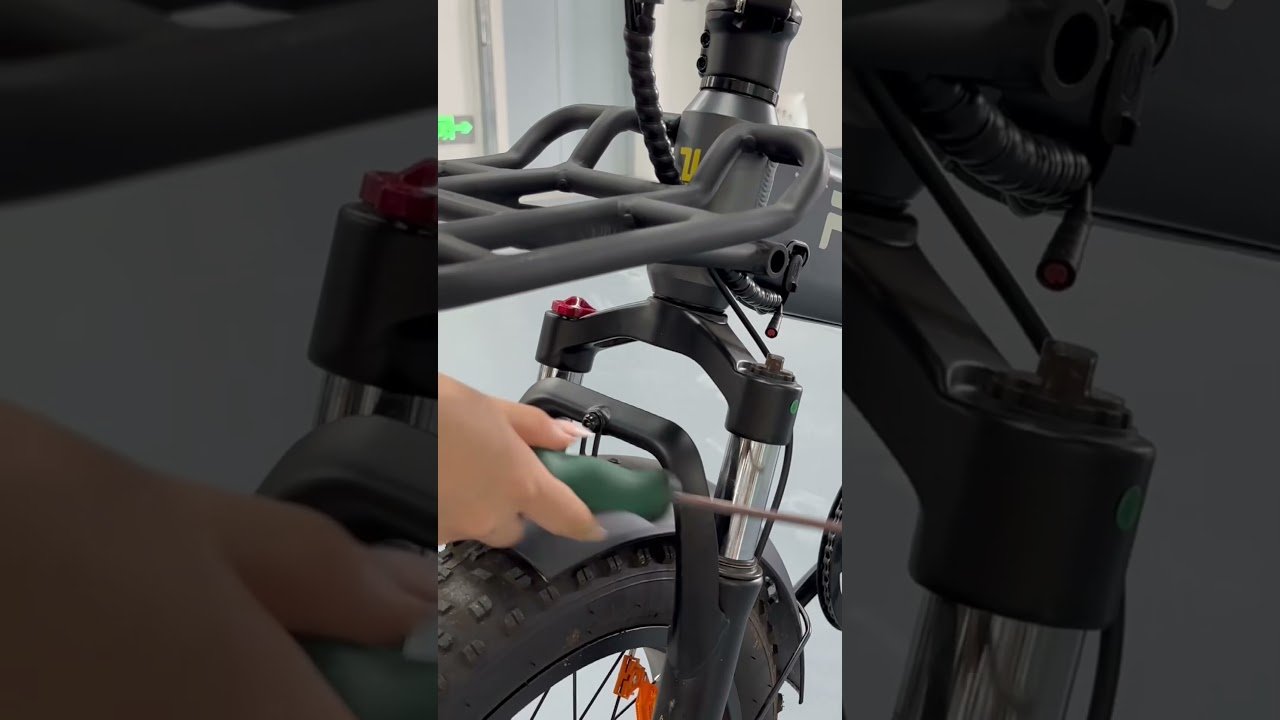
Brake and gear system: the video shows disc brakes (brake demo clips and creator riding at 01:30). The demo implies hydraulic discs with ~160–180 mm rotors and a 7-speed Shimano-style external cassette. Maintainable checks you must run:
- Pad wear: visually inspect pads monthly; replace when pad material is