https://www.youtube.com/watch?v=1t7G8T4V-sA Summary: eBike vs Electric Dirt Bike Key Takeaways
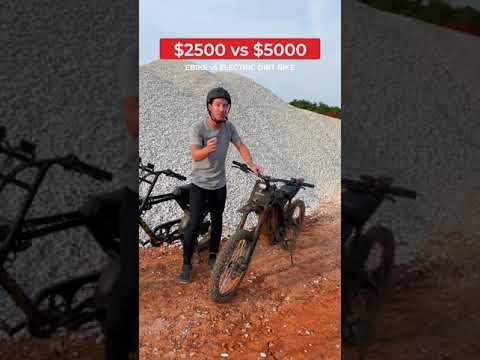
eBike vs electric dirt bike is the choice AuthenTech – Ben Schmanke puts front and center in the video: would you rather buy a roughly $2,500 electric bicycle or a roughly $5,000 Segway-style electric dirt bike? The creator asks, “Which one would you take?!” and that simple question reveals the real split: daily usefulness versus off-road excitement.
The short answer: choose an e-bike if you need commuting, errands, family rides, bike-lane access, easier storage, and lower ownership costs. Choose an electric dirt bike if you have legal trail access, private land, or OHV riding areas and you care more about acceleration, suspension travel, and dirt performance than carrying groceries.
Watch the original AuthenTech – Ben Schmanke video here: $2500 eBike vs $5000 Electric Dirt Bike!. The description also points viewers to Ben’s related Segway Dirt eBike review, which is the natural follow-up if you’re leaning toward the dirt-bike side.
| Category | $2,500 Electric Bicycle | $5,000 Electric Dirt Bike |
|---|---|---|
| Best for | Commuting, errands, paved paths, family rides | Trails, private land, OHV areas, thrill riding |
| Typical speed class | Class/2 up to mph or Class up to mph | Often faster, but usually not street-legal |
| Range | Often 25–60 miles depending on battery and assist | Can drop quickly with hard acceleration and hills |
| Charging | Commonly 4–8 hours for many removable batteries | Often larger packs; charging time varies by charger |
| Terrain | Pavement, gravel, light trails with the right tires | Dirt, jumps, steep climbs, rough trails |
| Maintenance | Bike-like: tires, chain, brakes, battery care | More moto-like: suspension, spokes, tires, brakes |
| Likely setup cost | Bike plus 10–20% for lock, helmet, rack, bags | Bike plus gear, transport, possible registration or insurance |

What the AuthenTech Video Is Really Comparing
According to AuthenTech – Ben Schmanke, the comparison starts with a clean value question: does a rider get more real-world benefit from a $2,500 e-bike or from a $5,000 electric dirt bike? The video’s transcript is short, but the premise is direct. Ben frames the decision as “the ebike vs dirt ebike,” with the dirt option represented by a Segway electric dirt bike.
That matters because these are not two versions of the same product. An electric bicycle is usually designed around pedals, legal speed classes, bike lanes, racks, lights, and practical transportation. A dirt e-bike or electric dirt bike is built around power delivery, suspension, off-road tires, stronger frames, and a riding position meant for standing on pegs or attacking trails.
For buyers, the terminology can get messy. When someone says e-bike, they might mean commuter e-bikes, fat tire e-bikes, cargo e-bikes, foldable frames, step-through e-bikes, high-step e-bikes, family e-bikes, a lightweight e-bike, or even an electric trike. When someone says electric dirt bike, they usually mean a trail-focused machine that may not fit into standard bicycle laws. As demonstrated in the video, the buying decision starts with price, but it shouldn’t end there.
eBike vs Electric Dirt Bike: Best Use Cases
eBike vs electric dirt bike becomes much easier when you match the machine to your actual week, not your fantasy weekend. If you ride to work three days a week, stop for groceries, share paths with pedestrians, and need to lock up outside a café, an electric bicycle is the practical choice. If your fun starts where pavement ends, and you have legal access to private land, OHV parks, or trail networks that allow motorized vehicles, the electric dirt bike makes more sense.
Choose an affordable e-bike if you’re a daily commuter, apartment dweller, parent, college student, RV traveler, or beginner. Step-through e-bikes make mounting easier when you’re wearing work clothes or carrying a child seat. Cargo e-bikes can replace short car trips; a rear rack, panniers, and a front basket can turn a 2-mile grocery run into a 15-minute ride.
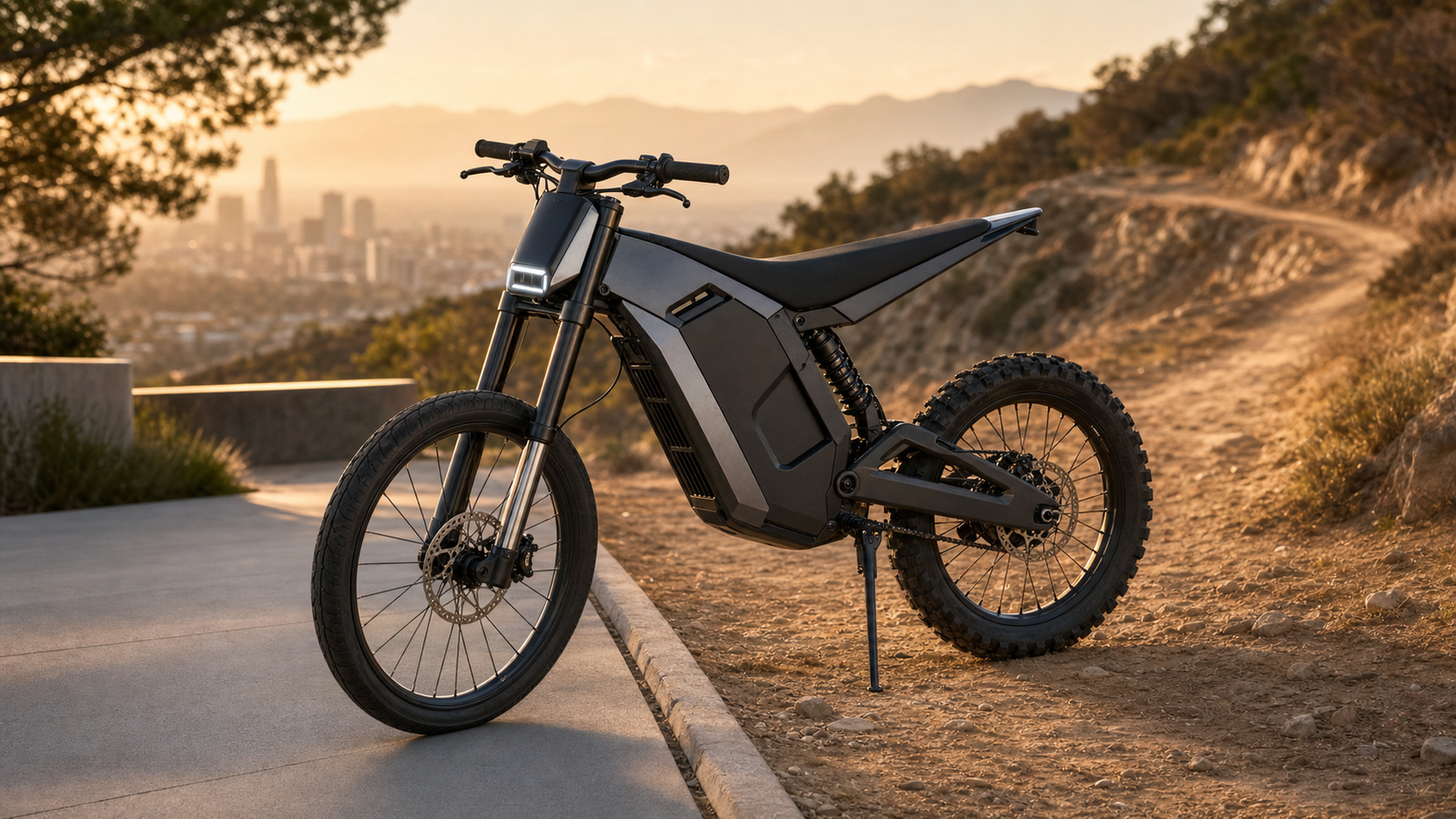
Choose the electric dirt bike if you care about off-road speed, suspension travel, and climbing loose terrain. The Segway-style dirt bike mentioned by the creator fits riders who want throttle-heavy riding, standing body position, and more aggressive tires. It’s not the natural pick for school pickups or errands, though. You’ll also need to think about where it can be ridden, where it can be stored, and how you’ll transport it if trails aren’t nearby.
- Beginner: step-through commuter e-bike with intuitive controls.
- Parent: cargo e-bike or family e-bike with child-seat compatibility.
- Small-space rider: foldable frames or a lightweight e-bike.
- Stability-focused rider: electric trike.
- Trail rider: off-road e-bikes for light trails, electric dirt bike for serious dirt.

Electric Bicycle Types: Frames, Tires, and Riding Style
The AuthenTech video has only a moment to present the e-bike side, so it’s worth unpacking the categories before you spend $2,500. Step-through e-bikes are the easiest to mount and are ideal for shorter riders, older riders, delivery use, or anyone carrying cargo. High-step e-bikes often feel stiffer and more traditional, which can suit taller riders or people who prefer a classic diamond frame.
Foldable frames are useful if you live in an apartment, travel in an RV, or need to fit the bike into a hatchback. The tradeoff is weight and hinge complexity; many folding fat tire models still weigh 60–75 pounds, so “folding” doesn’t always mean easy to carry upstairs. A lightweight e-bike in the 35–50 pound range is better if stairs, transit, or wall storage are part of your life.
Fat tire e-bikes blur the line between commuter and off-road e-bikes because 4-inch tires add comfort, traction, and confidence on gravel, sand, snow, and broken pavement. Still, they are not the same as an electric dirt bike. A true electric dirt bike typically has longer-travel suspension, moto-style geometry, stronger wheels, a more aggressive controller, and tires made for dirt bite rather than road efficiency.
Use this simple rule: buy a commuter e-bike for paved routes, a cargo e-bike for kids or groceries, an electric trike for stability, and an off-road e-bike only if your trails legally allow it. If you’re choosing between eBike vs electric dirt bike for mixed city use, the bicycle-style machine wins more often.
Specs That Matter: Motor, Battery, Range, and Brakes
The video’s $2,500 versus $5,000 anchor is useful because it shows where money goes. On an electric bicycle, $2,500 can buy a strong commuter or cargo setup with hydraulic disc brakes, a large battery, lights, fenders, and a rear rack. On an electric dirt bike, the higher cost usually pays for stronger frame construction, more powerful motor output, suspension components, off-road tires, and controller tuning that can handle hard acceleration.
Start with the battery. Compare watt-hours, not just volts. A 48V 14Ah battery equals 672Wh; a 52V 20Ah battery equals 1,040Wh. More watt-hours usually means more range, but it also means more weight and longer battery charging time. Many e-bike chargers are 2A to 4A, and a full charge often takes 4–8 hours depending on pack size.
Motor numbers need context. A 500W commuter motor can feel plenty strong on flat streets, while a 750W rear hub motor helps with hills, cargo, and heavier riders. Torque, measured in newton-meters, often tells you more about hill-start confidence than wattage alone. Brakes matter just as much. Hydraulic disc brakes generally offer stronger, more consistent stopping than mechanical discs, especially on heavier bikes or wet roads.
- Compare watt-hours before trusting range claims.
- Check brake type; hydraulic discs are worth prioritizing on heavy bikes.
- Confirm charging time and whether the battery is removable.
- Look for spare batteries before you buy, not years later.
- Read warranty and customer service reports, including verified 5-star reviews and negative reviews.
Real-World Range Testing: What Buyers Should Expect
Advertised e-bike range can be optimistic because range tests often use light riders, smooth pavement, low assist, mild temperatures, and steady speeds. In our experience reviewing buyer reports and owner testing methods, a practical e-bike range estimate is usually 60–80% of the headline number if you ride in mixed conditions. That gap grows when you use throttle, climb hills, carry cargo, or ride into wind.
Here are realistic examples. A lb rider on flat pavement using pedal assist level may see 40–60 miles from a large 700–900Wh battery. A lb rider using throttle on rolling hills might get closer to 20–35 miles from the same pack. A cargo e-bike carrying groceries or a child seat can lose additional range because weight increases motor load, especially from stop signs and hill starts.
An electric dirt bike drains differently. Aggressive acceleration, soft dirt, steep climbs, mud, sand, and high-speed riding can pull much more current than a commuter e-bike cruising at 15–20 mph. The creator’s comparison points you toward that tradeoff: power is fun, but power uses battery fast. In the eBike vs electric dirt bike decision, range isn’t only about battery size; it’s about how you ride.
- Fully charge the battery to 100%.
- Reset trip distance and average speed on the display.
- Ride a known route of 10–20 miles.
- Record rider weight, cargo load, assist level, temperature, wind, and terrain.
- Note remaining battery percentage or voltage.
- Repeat the same test after miles of ownership, once tires, brakes, and your riding habits settle in.
Brand and Model Comparison: Lectric eBikes and Alternatives
The $2,500 e-bike price point from AuthenTech – Ben Schmanke is high enough to include many serious options, not just entry-level bikes. Lectric eBikes is one of the major value-focused names to consider, especially if you want foldable frames, step-through e-bikes, fat tire models, cargo e-bikes, e-bike accessories, and frequent limited-time savings. Lectric is also known for selling complete packages that often include racks, fenders, lights, or comfort upgrades depending on the model and promotion.
Still, don’t buy on brand recognition alone. Rad Power Bikes, Aventon, Ride1Up, Specialized, Trek, and Segway-style electric dirt bikes serve different riders. According to our research into popular categories, direct-to-consumer e-bikes often win on price and included features, while dealer-supported brands can win on local service, test rides, and easier warranty help.
| Brand/type | Typical fit | Strengths | Watch-outs |
|---|---|---|---|
| Lectric eBikes | Affordable e-bikes, folding, cargo, step-through | Value, accessories, best-selling e-bike categories | Heavier models; assembly still required |
| Rad Power Bikes | Utility and family e-bikes | Recognizable brand, cargo options | Check local support and parts availability |
| Aventon | Commuter and fat tire e-bikes | Polished design, app features, dealers in some areas | Price rises with premium models |
| Ride1Up | Value commuter e-bikes | Strong spec-per-dollar | Assembly and tuning may matter more |
| Specialized/Trek | Dealer-supported commuters and lightweight e-bike models | Fit, service, refined ride quality | Higher price for similar battery size |
| Segway-style electric dirt bike | Off-road performance | Power, suspension, trail fun | Legal access, transport, higher cost |
If you’re unsure, take an e-bike quiz from major brands, then verify the result yourself: rider height range, stand-over height, battery size, local service, replacement parts, spare batteries, rack compatibility, child-seat rating, and customer service reputation.
Laws, Speed Classes, and Where You Can Ride
Legal access may be the biggest practical difference in the eBike vs electric dirt bike decision. A street-friendly electric bicycle can often use bike lanes, roads, multi-use paths, and certain trails if it fits local rules. An electric dirt bike may be treated as an off-highway vehicle, motorcycle, or unclassified motor vehicle depending on speed, pedals, VIN status, lighting, and where you live.
In many U.S. areas, e-bikes are grouped into three common classes. Class 1 provides pedal assist up to mph. Class 2 includes throttle assist up to mph. Class 3 provides pedal assist up to mph, usually without throttle at those higher speeds. These definitions are common, but they are not universal. States, cities, parks, school campuses, and trail managers can set different rules.
Electric dirt bikes sit in a tougher category. If the vehicle lacks pedals, exceeds e-bike class limits, or doesn’t have road equipment such as mirrors, brake lights, turn signals, approved tires, and a VIN, it may not be legal on public roads. Some areas require registration, insurance, OHV stickers, or age-specific safety gear.
- Check helmet rules and age limits before purchase.
- Confirm bike lane and trail access for your class of e-bike.
- Read trail signage; “no motorized vehicles” may include e-bikes.
- Ask about registration, insurance, and OHV permits for dirt bikes.
- Recheck local regulations in because e-bike rules are changing quickly.
Total Cost of Ownership Beyond the Sticker Price
The video’s price comparison is clear: about $2,500 upfront for the e-bike versus about $5,000 for the electric dirt bike. But the real ownership cost includes gear, accessories, repairs, battery aging, theft protection, and sometimes registration or insurance. For many buyers, the first-year difference is larger than the sticker price suggests.
For an electric bicycle, budget 10–20% of the purchase price for setup. On a $2,500 e-bike, that means roughly $250–$500 for a quality helmet, strong lock, lights if not included, rack, fenders, mirrors, phone mount, cargo bags, tire sealant, tubes, brake pads, and comfort upgrades. Family e-bikes may need a child seat, running boards, passenger bars, or extra bags.
For an electric dirt bike, safety gear and transport can be more expensive. A full-face helmet, gloves, boots, knee guards, body armor, hitch carrier, spare tubes or tires, and trail tools can add hundreds of dollars. Knobby tires may wear quickly on hardpack or pavement. Suspension service, brake bleeding, spokes, wheel bearings, chains, controllers, and battery packs can also cost more than basic e-bike parts.
Set aside a battery fund if you plan to keep either machine for several years. A replacement e-bike battery can cost several hundred dollars, while larger dirt-bike packs can cost significantly more. Also think about theft: a 60–80 lb e-bike still needs a serious lock, and a dirt bike needs secure garage storage.
Maintenance, Assembly, and Long-Term Reliability
For most new riders, easy assembly and intuitive controls matter more than peak power. A bike that arrives 85–95% assembled can still require handlebar alignment, front wheel installation, pedal installation, brake checks, tire inflation, display setup, and bolt torque checks. If that sounds stressful, pay a local bike shop for professional assembly before your first ride.
Routine electric bicycle care is simple but not optional. Keep tires inflated to the recommended range, check brake pads every few hundred miles, clean and lubricate the chain, inspect derailleur shifting, tighten rack and fender bolts, and look over electrical connectors after rain or transport. For battery charging, avoid storing the pack empty for long periods, keep it away from extreme heat, and use the supplied charger unless the manufacturer approves another one.
Electric dirt bike upkeep is closer to motorcycle habits. You’ll watch suspension seals, spoke tension, wheel bearings, brake fluid, knobby tire wear, chain stretch, and mud buildup. After dusty or wet rides, cleaning isn’t cosmetic; grit can shorten bearing, chain, and brake life. Hard trail use also means more frequent inspections.
Before buying, check customer service reputation, warranty length, replacement battery availability, parts diagrams, local bike shop support, owner communities, and verified 5-star reviews. As the video shows, price gets attention, but support determines whether you’re still happy after the first flat tire, brake squeal, or display error.
Final Buying Advice: Choose the Ride That Fits Your Week
The smartest choice is usually the one that removes the most friction from your life. If you need a vehicle for work, errands, school pickups, paved paths, and weekend cruising, buy the electric bicycle. Look for proper fit, hydraulic brakes, enough watt-hours for your route, available spare batteries, good customer service, and accessories that match your cargo needs.
If you have legal dirt access and want speed, jumps, climbs, and a more aggressive riding style, the electric dirt bike earns its price. Just budget for protective gear, transport, maintenance, and possible registration or insurance. Also confirm where you can ride before spending $5,000.
Here’s the practical next step: watch Ben Schmanke’s original comparison, then write down your top three rides for the next month. If two or more are commutes, errands, family rides, or city trips, choose an e-bike. If two or more are trail days on legal motorized land, choose the dirt bike. That simple test cuts through the spec-sheet noise and makes the eBike vs electric dirt bike choice much clearer.

Key Takeaways
- A $2,500 electric bicycle usually makes more sense for commuting, errands, family rides, paved paths, and legal everyday transportation.
- A $5,000 electric dirt bike is the better choice for riders with legal trail access who want off-road speed, stronger suspension, and dirt-focused performance.
- Compare watt-hours, brake type, charging time, spare battery availability, warranty support, and local service before buying either option.
- Budget beyond the sticker price: accessories, safety gear, locks, repairs, battery replacement, and possible registration or insurance can change the true cost.
- Before choosing, list your next month of real rides; your normal weekly use should decide the eBike vs electric dirt bike question.
Frequently Asked Questions
Is an e-bike better than an electric dirt bike?
An e-bike is better if you need legal street use, commuting range, cargo ability, bike-lane access, and easier storage. An electric dirt bike is better if you have legal off-road areas and care more about speed, suspension, and trail performance.
Why are electric dirt bikes more expensive than e-bikes?
Electric dirt bikes usually need stronger frames, higher-output motors, more demanding controllers, larger batteries, long-travel suspension, tougher wheels, and more powerful brakes. Those parts are built for hard acceleration, impacts, dirt, mud, and steep climbs rather than normal city riding.
How far can a $2,500 electric bicycle go on one charge?
Many $2,500 electric bicycles can deliver roughly 25–60 miles per charge, depending on battery capacity, rider weight, terrain, wind, temperature, tire pressure, assist level, and throttle use. A light rider on flat pavement using low pedal assist may get far more range than a heavier rider using throttle on hills.
Can you ride an electric dirt bike on the road?
Many electric dirt bikes cannot be ridden on public roads unless they meet local requirements for registration, VIN status, lights, mirrors, signals, insurance, and approved tires. Rules vary widely, so check your state, city, and local land manager regulations before buying.
What is the best first e-bike for beginners?
The best first e-bike is one that fits your height, feels stable, has intuitive controls, reliable brakes, easy assembly, and strong customer service. Many beginners should consider step-through e-bikes, commuter e-bikes, or foldable frames before buying a heavy high-power model.