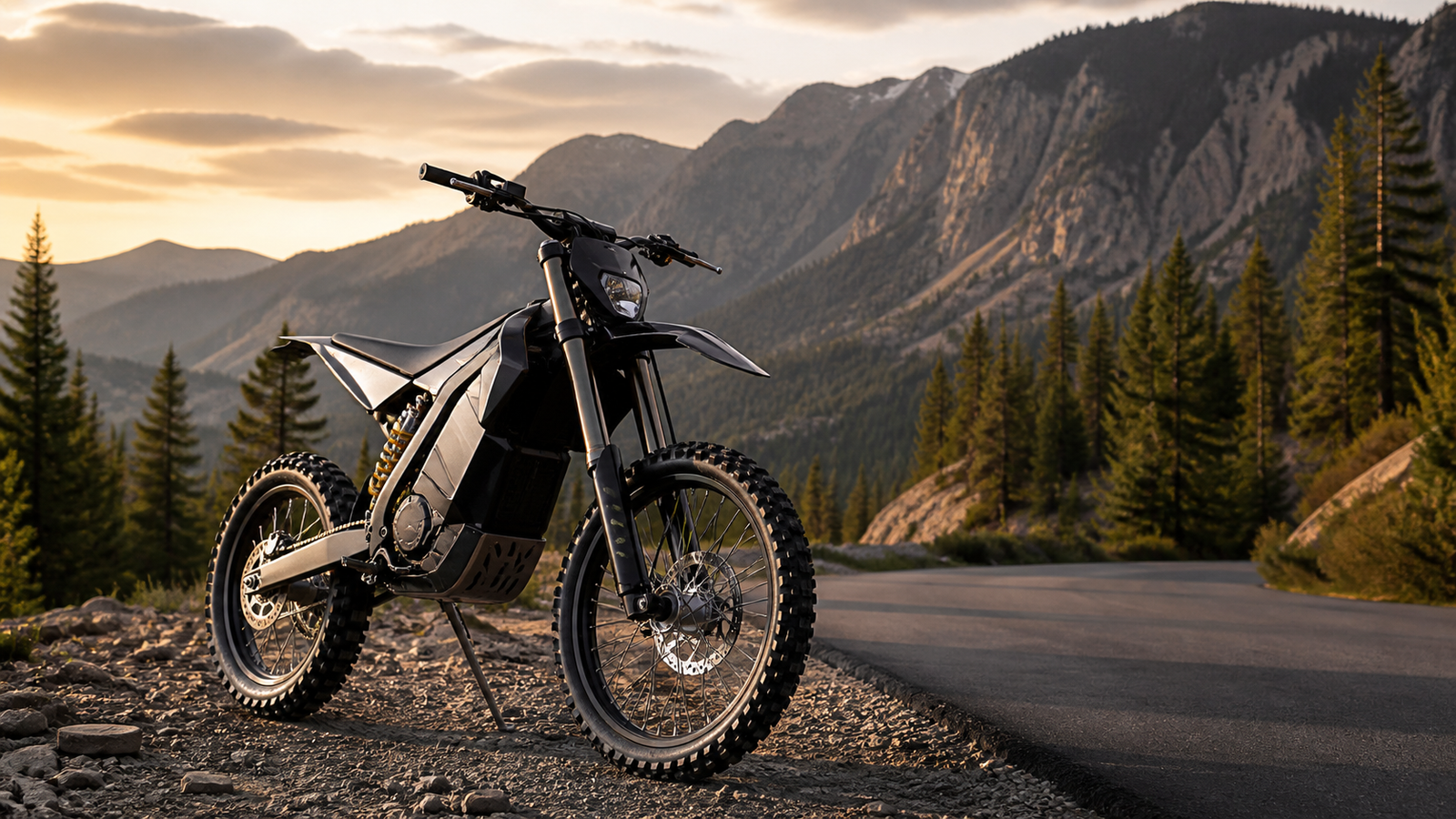
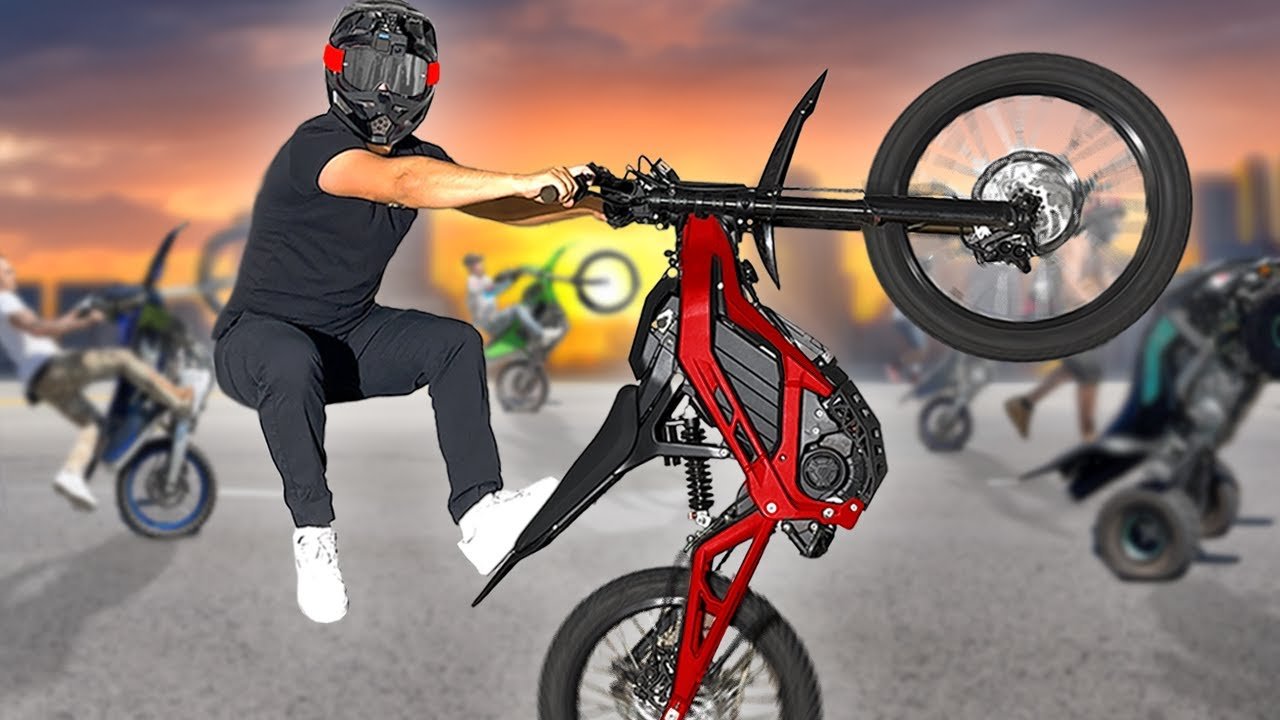
E-Ride Pro 3.0 Review: The Video’s Main Verdict
E-Ride Pro 3.0 review: if you want the short version right away, Sur Ronster’s verdict is unusually clear. In the opening moments of the video, roughly 00:00-00:45, the creator explains that this is his favorite bike in class because it works on both street and dirt without the usual list of immediate upgrades.
That distinction matters. According to the original Sur Ronster video, the E-Ride Pro 3.0 is not being positioned as a rival to higher-end machines like the Stark Varg or an RTR-type platform in outright performance. Instead, Sur Ronster places it in a lighter dual-sport category, closer to the Talaria MX5, and says that within that class he prefers the 3.0 overall.
That’s the heart of this article for a buyer: does a factory-balanced electric bike with real off-road ability, useful street hardware, and no urgent power upgrades justify an asking price around $5,000? As demonstrated in the video, the answer leans strongly toward yes for the right rider, but not for everyone.
The creator explains that the selling points are practical rather than flashy:
- Light weight compared with larger electric motorcycles
- Dual-sport readiness right out of the crate
- Strong power without feeling excessive
- Street-to-trail flexibility without swapping wheels or major components
There are limits, though. The video also shows highway exposure, large-group ride risks, uncertain road legality, and one feature the creator still wants: a regen throttle. So this isn’t a simple “buy it no matter what” recommendation. It’s a more useful claim than that. Sur Ronster’s point is that the E-Ride Pro 3.0 hits a rare balance that many riders actually need more than peak numbers on a spec sheet.

TL;DR: Key Takeaways From the E-Ride Pro 3.0 Review
If you only need the buying answer, this E-Ride Pro 3.0 review comes down to one question: do you want one lightweight machine that can handle urban riding and trail use with very little setup? If yes, the video makes a strong case for the 3.0.
According to Sur Ronster, the biggest positives show up early, around 00:00-01:10, and then again near 15:00-16:00. The bike is praised for its out-of-box power, dual-sport 19-inch wheels and tires, upgraded belt drive, capable brakes, and a chassis that still feels light and manageable. The creator repeatedly returns to the same idea: unlike many bikes in this segment, this one doesn’t immediately demand aftermarket spending.
The battery observations are also notable, even if they aren’t a formal range test. The video shows 45% battery remaining during the ride at around 12:30. Later, after a mountain section with climbing and descending, Sur Ronster says the bike still has 76% remaining at about 18:00. Those two numbers don’t describe one continuous laboratory loop, but they do suggest efficient real-world use under mixed conditions.
Main drawbacks? The creator explains that the lack of a regen throttle is the clearest missing feature versus the Talaria MX5. You also get only two factory power modes, Eco and Sport, which some riders will love for simplicity and others will see as limiting. Then there’s the bigger issue: public-road legality is not guaranteed, and the group-ride footage from roughly 04:30-06:00 shows why large rideouts can become unpredictable fast.
Quick recommendation:
- Buy it if you’re an experienced rider who wants one machine for back roads, private land, and trails.
- Think twice if you’re a beginner looking for a slow commuter or a guaranteed legal street bike.
- Compare closely if your top priority is regen throttle behavior or much higher motocross-level performance.
What Makes the E-Ride Pro 3.0 Different?
The easiest way to understand the E-Ride Pro 3.0 is to break it into four parts: power delivery, weight, street equipment, and off-road readiness. Around 00:20-01:00, the video shows why that mix stands out. Plenty of bikes can do one job well. Far fewer can cover both pavement and dirt without feeling compromised in both places.
Start with power delivery. Sur Ronster doesn’t describe the bike as overwhelming. He calls it the “perfect amount of power”, which is more helpful than a bragging-rights claim. That means enough torque to lift the front end, enough acceleration to stay interesting, and enough restraint that the bike still feels usable off-road. For many riders, that’s the sweet spot.
Then there’s weight. According to Sur Ronster, the larger SR model feels like a different proposition because it weighs about twice as much, a point he makes around 08:30-09:20. Even if that’s a rider-level comparison rather than a published spec-sheet measurement, the practical message is clear: the 3.0 is easier to manage. Lower weight helps in at least four ways:
- Maneuverability: quicker direction changes on tight trails and city corners
- Braking feel: less mass to settle under hard stops
- Loading convenience: easier to put in a truck, trailer, or hitch carrier
- Technical control: less tiring when you need to correct line choice on rocks or mud
The creator also compares it directly with the Talaria MX5, calling that bike the closest competitor because it offers a regen throttle. That’s an advantage the MX5 can claim. Still, as demonstrated in the video, Sur Ronster says he prefers the E-Ride Pro 3.0 overall because the total package feels better balanced.
Street hardware and trail readiness complete the picture. You get lighting controls, dual-sport tires, and enough suspension-and-chassis confidence to move from roads to dirt in the same outing. That’s why this E-Ride Pro 3.0 review isn’t really about one standout spec. It’s about how the bike avoids obvious weak points.
Factory Features and Performance: Is It Ready to Ride?
One of the strongest claims in the video is also the simplest: the E-Ride Pro 3.0 feels factory-ready. Around 00:35-01:10, Sur Ronster praises four specific features that matter more than marketing extras: 19-inch dual-sport wheels and tires, an upgraded belt drive, strong brakes, and a factory tune that doesn’t leave the bike feeling unfinished.
That last point is a big deal in this segment. Plenty of electric bikes tempt buyers with the promise of future upgrades, then need immediate spending on tires, wheels, controllers, or power delivery cleanup. According to Sur Ronster, this isn’t one of those bikes. The creator explains that no power upgrade is needed right away, and that changes the ownership math because your first dollars can go toward gear and maintenance instead of fixing the stock setup.
The practical value of the tire setup becomes obvious around 14:30-15:30. The same wheels and tires used on pavement are then taken straight into dirt. That means no wheel swap, no loading two tire sets, and no separate street-versus-trail planning. If you actually ride mixed terrain, that convenience adds up over a season.
The simplified controls matter too. Around 09:00-10:00, the creator says he likes the bike’s two-mode layout: Eco and Sport. Some riders want endless menus, but Sur Ronster prefers the original-sur-Ron style simplicity. Fewer options can mean less distraction and faster adaptation, especially when terrain changes quickly.
The updated lighting control, shown near 12:00-13:00, is one of those small changes that actually affects daily use. The switch sits near the rider’s trigger finger. One click blacks out the front and rear lights; another click brings them back. That’s useful off-road, on private property, or when you need quick control over visibility setup.
Before your first ride, use this checklist:
- Set tire pressure for your terrain; don’t assume shipping pressure is correct.
- Inspect brake pads and rotor bolts for alignment and tightness.
- Check belt tension and look for unusual tracking or noise.
- Torque critical fasteners including axle hardware, bar clamps, and foot controls.
- Charge the battery fully and confirm charger voltage compatibility.
- Verify local lighting rules if you plan to ride anywhere near public roads.
Those steps won’t make the bike glamorous, but they will make your first ride safer and more predictable.

E-Ride Pro 3.0 Review on the Street: Power, Handling, and Rideability
Street behavior is where the E-Ride Pro 3.0 seems to win riders over quickly. In the video’s early riding impressions, roughly 01:00-03:30, Sur Ronster shows why the bike feels exciting without crossing into uncontrollable. The front wheel comes up easily, the brakes respond well, and the overall tune feels sharp instead of lazy. The creator explains that it has the right amount of power, which is really a statement about balance, not speed alone.
That becomes even clearer in the wheelie segment around 10:30-11:30, where the bike reportedly keeps the front wheel up at about 50-53 mph. That number tells you something about available torque and stability, but it should be read as a stunt demonstration, not a recommendation for public-road behavior. As demonstrated in the video, the bike is capable; that doesn’t mean every use of that capability is responsible or lawful.
There’s an important difference between closed-course performance and actual street legality. Before you ride any machine like this on public roads, verify at least five things:
- Registration status in your state or country
- Insurance requirements
- License or endorsement requirements
- Equipment compliance such as mirrors, horn, signals, and brake light
- Speed classification rules that separate e-bikes from motorcycles
The group-ride footage from about 03:30-08:30 also shows why street riding isn’t just about the bike itself. You see traffic interaction, highway exposure, quads, abrupt pace changes, and riders getting split from the pack. One rider appears hurt. Another needs help. The creator gets separated and has to guess the route before reconnecting. That’s a realistic reminder that a strong bike can still put you in weak situations if the group is chaotic.
Smart street-riding habits:
- Ride within the posted speed limit.
- Leave more following distance than you think you need.
- Wear a full-face helmet, gloves, eye protection, and abrasion-resistant gear.
- Keep stunt behavior away from traffic, intersections, and pedestrians.
- Start with enough battery to return without relying on rescue or a push.
Used that way, the E-Ride Pro 3.0 looks quick, controllable, and genuinely fun on pavement.
Trail Capability and Real-World Battery Range
The off-road section is where the dual-sport argument really comes together. From roughly 13:30-17:30, the video shows the E-Ride Pro 3.0 moving from pavement into rocky, muddy, and uneven ground without modification. According to Sur Ronster, that’s one of the bike’s biggest strengths: you don’t have to rebuild it just to enjoy mixed terrain on the same day.
The range observations are especially interesting because they come from actual riding rather than a fixed-loop test. At around 12:30, the bike is shown with 45% battery remaining. Later, near 18:00, after climbing and descending a mountain section, Sur Ronster says there is still 76% left. Those numbers are not directly comparable as one single continuous drain sequence, so you shouldn’t treat them as an official maximum-range claim. But as demonstrated in the video, they do support the creator’s impression that the 3.0 offers some of the best range in its class under real riding conditions.
Battery percentage on any electric bike depends heavily on variables the video can’t standardize:
- Rider weight
- Average speed and peak-throttle use
- Temperature and battery condition
- Terrain including mud, sand, and climbing
- Tire pressure and rolling resistance
- Elevation change and repeated acceleration
The creator also includes a useful cautionary moment around 16:00-17:20. After getting more confident on the trail, he clips a rock with his foot and notes that it hurt even with boots on. That detail matters because it shows how quickly confidence can outrun margin for error on technical terrain.
Trail-preparation sequence:
- Lower tire pressure carefully for traction, but stay within safe limits for your rim and terrain.
- Switch from casual shoes to boots before rocks, ruts, or ledges.
- Inspect the route for steep descents, water crossings, and loose rock.
- Ride with a partner when possible, especially in remote areas.
- Carry recovery basics such as tools, tube repair gear, pump, and hydration.
- Reserve 20-30% battery for the ride back instead of using the whole pack outbound.
This is where the E-Ride Pro 3.0 review gets strongest: the bike seems genuinely comfortable doing both jobs without asking you to choose one identity.
Safety, Legality, and the Risks of an ‘Illegal Rideout’
The video title uses the phrase “Illegal Rideout”, and that deserves direct treatment rather than a wink and a shrug. A big organized ride can involve several separate legal issues depending on where it happens: public-road use without proper registration, unsafe group behavior, trespass, equipment violations, or riding in areas that prohibit this class of vehicle. Capability is not the same thing as legal permission.
From about 03:30-08:30, the footage shows several situations that should make any buyer think beyond fun-factor clips. Riders merge into complex traffic environments. The group stretches and compresses. At least one rider appears to need help after a fall. Another machine runs into trouble. Sur Ronster also encounters a stranded gas-powered rider and helps push him toward a better position. Those moments show community, yes, but they also show how quickly a social ride can become a logistics and safety problem.
The creator explains the bike’s strengths, but the legal classification question is separate. A machine that can reach motorcycle-like speeds may trigger requirements for:
- Registration and VIN verification
- Motorcycle endorsement or license class
- Insurance coverage
- Mirrors, horn, brake light, turn signals, and reflectors
- Approved tires and equipment standards
If you plan to ride near San Diego or elsewhere in California, start with the California DMV and work forward from there. Don’t assume a headlight makes the bike legal. Don’t assume a seller’s listing answers registration questions. And don’t assume your local enforcement view matches someone else’s online experience.
Minimum safety standard before any mixed on-road/off-road outing:
- Legal location confirmed in advance
- Helmet and boots every time
- Eye protection and gloves
- Predictable riding with no surprise swerves in groups
- Buddy coverage and shared route plan
- Phone access and emergency contact readiness
- Extraction route if the bike or rider can’t continue
That standard may sound strict, but the video itself shows why it’s necessary.
Buying the E-Ride Pro 3.0: Price, Support, and Setup
The price framing is simple: this is presented as a roughly $5,000 machine, and the key question is whether you’re paying for actual readiness or just a promising base platform. Based on the video, the E-Ride Pro 3.0 appears to offer the more attractive version of that deal. You’re not merely buying a motor and battery. You’re buying a factory package with dual-sport tires, useful brakes, light weight, and a tune that Sur Ronster says does not need immediate power work.
That’s especially relevant once you think like an owner instead of a viewer. A cheaper bike that needs wheels, tires, controls, or performance fixes can erase its purchase advantage quickly. In that sense, this E-Ride Pro 3.0 review is less about sticker price than about first-year ownership cost.
There’s also a commercial disclosure angle that matters for trust. Around 00:35-01:00, Sur Ronster says he has a strong relationship with E-Ride Pro and states that orders through Roster Rides receive priority shipping and direct service support, often with him responding to service emails. That is useful information, but it should be read as a retailer relationship, not independent lab-style testing. The creator is transparent about that, and readers should keep it in mind.
The retailer named in the video is Roster Rides. Before ordering, do more than look at the product page.
Pre-purchase checklist:
- Confirm stock status and realistic delivery time.
- Read warranty terms for battery, motor, controller, and wear items.
- Ask about replacement parts including belts, brake components, plastics, and chargers.
- Verify charger voltage and outlet compatibility for your home setup.
- Understand battery policy for shipping, returns, and long-term support.
- Check registration eligibility before paying if street use matters to you.
- Review return conditions for delivered-but-unregistered units.
Also budget for the real ownership extras:
- Protective gear
- Maintenance supplies
- Transport solution such as a hitch carrier or truck ramp
- Insurance if applicable
- Spare tubes or tires
- Possible street-legal conversion costs
That broader math tells you whether the 3.0 is affordable, not just whether the headline price looks tempting.
Who Should Buy It—and Who Should Choose Another Bike?
The E-Ride Pro 3.0 makes the most sense for riders who already understand throttle control, line choice, and the difference between having power and needing power. According to Sur Ronster, it suits people who want strong acceleration, low weight, mixed-surface capability, and minimal modification work. The video’s combination of street clips and mountain riding, especially from 13:30-18:30, supports that recommendation pretty well.
This is not just a city machine and not a dedicated motocross bike either. It appears best suited to riders who split time between urban back roads, private property, and marked off-road trails. If your weekends involve loading one bike, meeting friends, and riding whatever terrain the day presents, the 3.0’s factory balance starts to make a lot of sense.
Who should look elsewhere? There are at least three groups:
- Riders chasing maximum performance: a Stark Varg or RTR-style machine is the better fit if outright speed and top-end capability matter more than weight and simplicity.
- Riders who prioritize regen throttle behavior: Sur Ronster specifically points to the Talaria MX5 as the closest alternative with that feature.
- Beginners or low-speed riders: a smaller electric trail bike or lower-output platform may be smarter if your goal is confidence-building rather than fast mixed-use riding.
Commuters need extra caution. If your real use case is daily transportation, first verify legal classification, lighting compliance, range margin, charging access, theft protection, and insurance. A bike can be fun and still be inconvenient for routine commuting.
Simple decision rule: choose the E-Ride Pro 3.0 if factory balance matters more than maximum power and your intended riding areas legally allow what the bike is built to do. Skip it if you need guaranteed road legality, beginner-friendly output, or flagship-level competition performance.
Is the E-Ride Pro 3.0 street legal?
Street legality depends on equipment, classification, registration status, rider licensing, and local law. The video shows public-road riding between roughly 03:30-08:30, but that footage does not prove the bike is universally street legal in every jurisdiction.
Before buying, check whether the specific VIN and configuration can be registered where you live. Also confirm whether lights, mirrors, tires, a horn, and insurance are required. Adding a headlight alone usually does not transform an off-road vehicle into a legal motorcycle.
How much range does the E-Ride Pro 3.0 have?
The video gives ride-specific battery observations, not an official range certification. Around 12:30, the bike shows 45% battery remaining, and near 18:00, Sur Ronster says it still has 76% remaining after a mountain section.
Your result can vary a lot with speed, elevation, rider mass, tire pressure, temperature, and how often you use full throttle. The best approach is to run your own range test: start at 100%, ride a familiar loop, note mileage and climbing, and return with at least 20% reserve in both Eco and Sport modes.
Does the E-Ride Pro 3.0 need upgrades right away?
According to Sur Ronster, one of the bike’s biggest strengths is that it doesn’t need immediate upgrades. Early in the video, he specifically praises the stock power, brakes, belt drive, and 19-inch dual-sport wheels and tires.
That doesn’t mean you’ll never modify it. It means your first dollars can go toward safety gear, tools, and setup instead of correcting obvious weak points. For many riders, that is better value than buying a cheaper bike that needs work before it feels complete.
How does it compare with the Talaria MX5?
Sur Ronster calls the Talaria MX5 the closest competitor and notes one feature he wishes the 3.0 had: a regen throttle. If that function matters a lot to you for speed control or braking feel, the MX5 deserves serious consideration.
Even so, the creator says he still prefers the E-Ride Pro 3.0 overall. His reasoning is that the total package feels more dialed in, especially when you factor in stock tires, usable power, and dual-sport versatility.
Is the E-Ride Pro 3.0 good for beginners?
Probably not as a first choice for most new riders. The bike appears light and manageable, but it also has enough power to lift the front wheel easily and keep experienced riders entertained on both roads and trails.
If you’re new, a smaller or lower-output electric trail bike may help you build skills with less risk. The 3.0 is better suited to riders who already have solid braking habits, throttle discipline, and some off-road awareness.
Final Verdict: E-Ride Pro 3.0 Review Summary and Next Steps
This E-Ride Pro 3.0 review lands in a pretty specific place. According to Sur Ronster, the bike isn’t the absolute king of raw performance, and it doesn’t pretend to be. What it does offer is something many riders may value more: a rare factory balance of light weight, strong usable power, dual-sport tires, capable brakes, and real pavement-to-dirt flexibility.
The video shows three especially convincing points. First, the 3.0 performs well out of the box without immediate power upgrades. Second, it handles both street and trail riding with the same basic setup. Third, battery observations such as 45% remaining mid-ride and 76% remaining after a mountain section suggest encouraging real-world efficiency, even though they don’t replace a formal range test.
The tradeoffs are just as important. You don’t get a regen throttle. You may face street-legality complications. And the video’s group-ride scenes are a reminder that even a well-sorted bike can be used in ways that create unnecessary risk.
Your next steps should be practical:
- Watch the original video and pay attention to both the praise and the safety context.
- Confirm whether the bike can be legally used where you plan to ride.
- Price the full ownership package, including gear, parts, transport, and insurance.
- Compare it directly with the Talaria MX5 if regen throttle matters to you.
- Choose the 3.0 if you want a factory-ready dual-sport electric bike more than a peak-spec racing machine.
That’s the clearest takeaway from Sur Ronster’s ride. For the right rider, the E-Ride Pro 3.0 may not be the most extreme option available in 2026, but it could easily be the one you use the most.

Key Takeaways
- Sur Ronster’s main verdict is that the E-Ride Pro 3.0 is one of the few lightweight dual-sport electric bikes that feels truly sorted from the factory.
- The strongest strengths are stock power, 19-inch dual-sport wheels and tires, upgraded belt drive, useful controls, capable brakes, and a manageable chassis.
- Real-world battery observations in the video are encouraging, with 45% remaining mid-ride and 76% remaining after a mountain section, though they are not official range claims.
- The biggest cautions are legal uncertainty on public roads, no regen throttle, and the safety risks shown during large group rideouts.
- It makes the most sense for experienced riders who want one machine for mixed terrain and who can legally use it where they ride.
Frequently Asked Questions
Is the E-Ride Pro 3.0 street legal everywhere?
No. Street legality depends on local vehicle classification, registration rules, required equipment, licensing, and insurance. The video shows road riding, but that does not confirm universal approval in every state or country.
What is the main advantage highlighted in this E-Ride Pro 3.0 review?
The main advantage is factory balance. According to Sur Ronster, the bike combines light weight, strong stock power, dual-sport tires, and trail-ready usefulness without forcing you into immediate upgrades.
What are the biggest weaknesses mentioned in the video?
The clearest drawbacks are the lack of a regen throttle, limited factory power-mode options, and uncertainty around legal public-road use. The group ride also shows how risky chaotic street situations can become even on a capable bike.
Is the E-Ride Pro 3.0 better than the Talaria MX5?
Sur Ronster says he prefers the E-Ride Pro 3.0 overall, but he also points out that the Talaria MX5 has a regen throttle. If that single feature matters a lot to you, the MX5 may still be the better fit.
How should you test range after buying one?
Start with a familiar loop at 100% charge and record distance, elevation, mode used, and ending battery percentage. Repeat the test in both Eco and Sport, and keep a 20-30% reserve so your first rides don’t end with a recovery problem.
