TL;DR — Key Takeaways
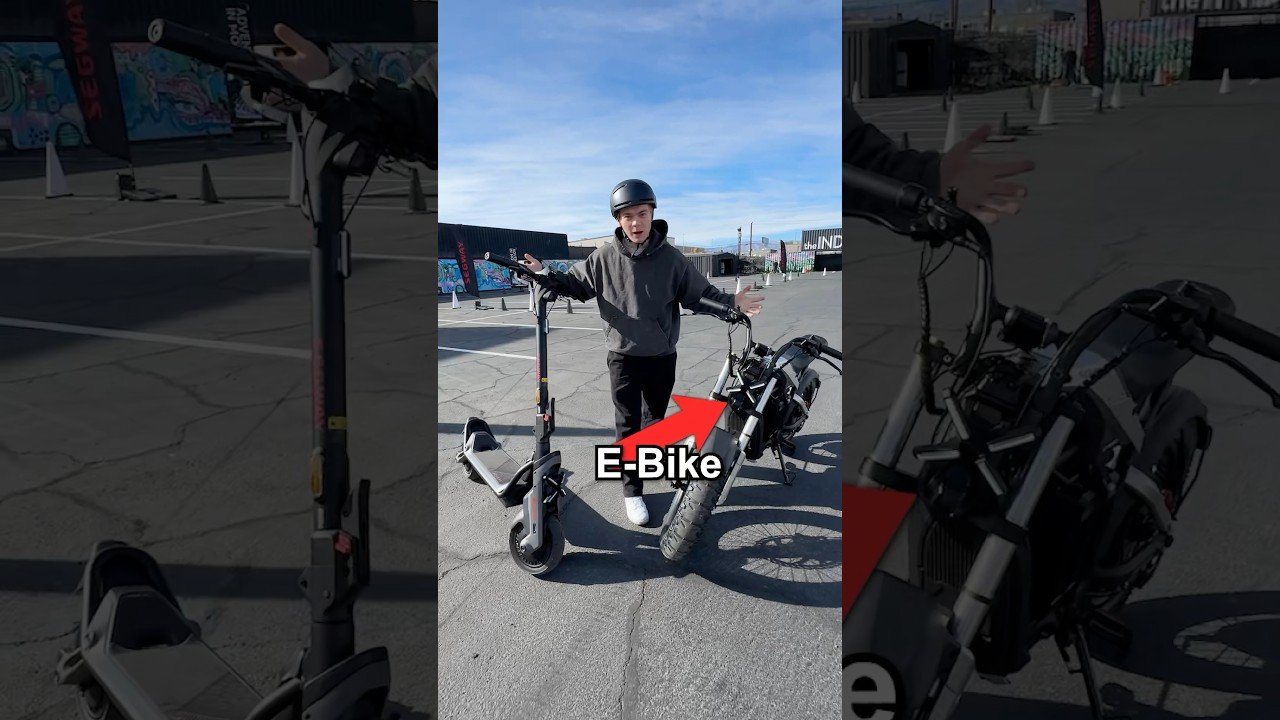
electric bicycle — For most sustained commutes the electric bicycle is the better choice; e-scooters win for short, last-mile portability (00:10).
The creator explains the core tradeoffs on-screen in the intro (Josh Kreuger, 00:08) and runs the numbers through demos and spec checks later in the video.
- Range: Typical e-bike range 30–80+ miles; e-scooters generally 10–40 miles (see 03:20, 06:15).
- Weight / Portability: E-bikes usually weigh 18–30+ kg, foldables ~12–18 kg; e-scooters ~10–20 kg (07:40, 08:05).
- Cost: Entry e-scooters $400–$1,000; entry e-bikes $1,000–$2,500; mid-range $2,500–$5,000.
- Maintenance: Battery lifespan 3–6 years (500–1,000 cycles); replacement ~$300–$800 (11:00).
- Best use case: Choose e-bikes for longer, mixed-mode commutes and cargo; choose e-scooters for short last-mile hops and easy storage.
Data points: common battery sizes 300–750 Wh, typical e-scooter packs 200–500 Wh, charging times approximately 3–8 hours depending on charger amps (03:20, 07:05).
Quick actions: Download the test-ride checklist below, try a local demo, and watch the full video for model rides: Watch Josh Kreuger’s video. Sponsor link: Segway.

Core thesis: Why the electric bicycle matters for commuters
E-bikes usually beat e-scooters for sustained commuting while e-scooters are superior for last-mile portability — that’s the main point the video makes (01:05). The creator explains that motor size, battery capacity, and the ability to pedal meaningfully shift what a vehicle can do for your commute (01:05–01:30).
According to Josh Kreuger, the decisive factors are:
- Battery capacity in Watt-hours (Wh) determining range; common commuter packs are 300–750 Wh.
- Motor type—mid-drive offers climbing and efficiency benefits, while hub motors simplify design (demo at 05:00).
- Pedaling capability—pedal-assist turns an e-bike into a hybrid human-electric machine, expanding range and exercise options (pedal-assist demo at 05:30).
The video gives a solid on-road demo at 01:45 showing real-world ride impressions; I’ll expand that by adding long-term ownership context, brand comparisons, deeper battery-tech analysis, and troubleshooting tips that Josh only briefly touches on (see 03:30). You’ll get both the practical buying checklist and the owner’s perspective: how costs and maintenance compound over years, how battery tech has evolved through 2024–2026, and what to expect from major manufacturers like Bosch and Shimano.
Three core evidence lines support the thesis: battery Wh correlates to range, motor architecture affects climb and torque, and user-test impressions highlight daily usability differences—each of these is demonstrated and timestamped in the video for quick reference (01:45, 03:20, 05:00).
Electric bicycle vs e-scooter: mechanical and electrical differences
Start by comparing three primary systems: battery, motor, and drivetrain. The video demo compares a Segway foldable and larger commuter e-bikes and shows spec sheets at 04:10 highlighting pack sizes and voltage differences.
Battery: Typical commuter e-bike packs are about 300–750 Wh, while many e-scooters sit around 200–500 Wh. Higher Wh means more range but also more weight and cost; the Segway specs shown (04:10) illustrate that foldable scooters sacrifice Wh to hit weight targets.
Motor types: Hub motors are cheaper and simpler but usually deliver lower torque and less efficient hill performance. Mid-drive motors (examples: Bosch, Shimano) are mounted near the crank and use the bike’s gears to keep the motor in an efficient RPM band — this improves climbing and cargo hauling (video mentions Bosch and Shimano at 05:00).
Two power-related data points: common e-bike motor ratings range from 250 W (EU legal limit) up to 750 W+ on US/utility models; typical mid-drive torque specs are roughly 40–90 Nm depending on model and tuning.
Pedal-assist vs throttle: The creator explains how pedal-assist changes ride feel at 05:30 — pedal assist means the motor amplifies your input, extending range and smoothing acceleration. E-scooters often rely on throttles with limited user input, so you hit top speed without pedaling economy.
Checklist for evaluating specs:
- Read battery Wh — don’t just look at voltage or Ah alone.
- Check nominal motor power and torque ratings (W and Nm).
- Verify pedal-assist vs throttle — decide which you prefer for range or convenience.
- Test regenerative braking if present and see how it affects real-world range.

Range, charging time, weight, and foldable options
Range, charging time, and weight are the practical factors you’ll feel every day. The video’s road tests show typical city commute ranges: e-bikes often deliver 20–50 miles in real urban use (06:15), while e-scooters tend to land in the 8–25 miles window depending on speed and rider weight (06:50).
Charging time varies with battery size and charger current: expect roughly 3–8 hours. The Segway charger demo at 07:05 shows a mid-sized pack climbing from 10% to 90% in about 4–6 hours with the standard charger; higher-amp fast chargers shorten that but cost more and may affect battery longevity.
Weight & portability: Full-size commuter e-bikes typically weigh 18–30+ kg; foldable e-bikes: ~12–18 kg; e-scooters commonly range 10–20 kg (lift/portability demo at 07:40). If your daily commute requires carrying or multi-modal travel, folding or lighter weight matters hugely.
Foldable trade-offs: You get compact storage and carry convenience, but most foldables reduce battery capacity and peak power. The creator folds a model on-screen at 08:05 to illustrate how smaller dimensions affect handling and range.
How to calculate expected range: Use this simple formula: Battery Wh ÷ Average Wh/mile = Estimated Range (miles). Example: a Wh battery ÷ Wh/mile = 25 miles. For planning, assume 10–30% worse range in winter or hilly routes.
Safety features, accessories, and customization
Safety should be your first upgrade. The creator tests brakes and visibility at 09:10 and shows that quality disc brakes reduce stopping distance significantly over drum or basic mechanical systems.
Essential safety features:
- Lights: bright front and rear lights with daytime visibility
- Brakes: hydraulic disc brakes or high-quality mechanical discs
- Reflective gear and integrated turn signals for night riding
Accessories the video highlights (and the Segway accessory line referenced in the description) include helmet, lock, panniers, mirrors, phone mount, fenders, and integrated cargo racks. These are practical: a good lock and a visible light prevent theft and accidents more than fancy upgrades.
Customization options are wide: you can replace saddles for comfort, upgrade tires for puncture resistance, and, where supported, tune pedal-assist maps to redistribute power and improve range. The creator installs an accessory in the video at 09:50 to show how straightforward many upgrades are.
Two quick data points: stopping distance at mph with quality disc brakes can be 10–15 feet shorter than with basic brakes depending on conditions; recommended tire pressures vary — 45–65 psi for narrow road-style commuter tires and 30–50 psi for wider commuter tires.
Actionable checklist: prioritize brakes and visibility upgrades first, then add comfort (saddle, grips) and cargo (panniers, racks). For installs: follow manufacturer torque specs, use threadlocker on critical bolts, and test ride on a short route before re-tightening.
Brands, models, and a comparison of top players
The creator highlights Segway’s lineup (03:05) and rides multiple models between 04:30 and 05:40. The broader market includes Trek, Specialized, Rad Power Bikes, Bosch and Shimano as component leaders.
Brand strengths: Bosch is known for reliable mid-drive systems and strong dealer integration; Shimano brings shifting and e-bike component integration; Rad Power Bikes offers value-oriented packages; Trek and Specialized are premium, with strong frame design and dealer service networks.
Model snapshots (examples discussed or ridden in the video):
- Segway foldable model (shown 03:00–04:00): price varies by spec, foldable, battery ~200–400 Wh, weight ~12–16 kg, best for last-mile use.
- Rad Power commuter (discussed 04:30): value pricing (~$1,200–$1,800), hub motor or mid-range motor options, battery ~500 Wh, good for budget commuters.
- Trek commuter e-bike (demo at 05:40): premium frame, Bosch mid-drive option, battery ~500–750 Wh, strong dealer service and accessories.
When comparing, consider: price range, motor type (mid-drive vs hub), battery Wh, weight, foldability, and best use case (commute vs cargo vs recreational). Josh Kreuger’s video timestamps 04:30 and 05:40 show specific model rides and handling impressions that help illustrate the differences.
Actionable advice: Pick Rad Power if you want low upfront cost and good range; pick Trek or Specialized if you value dealer service and premium frames; pick Segway for compact foldables and last-mile focus. Always check local service availability before buying.
Cost, maintenance, and long-term ownership experiences
Upfront cost is only part of ownership. The creator notes price brackets around 10:20, and the video includes owner anecdotes about long-term costs at 11:00 and 12:55.
Typical price ranges:
- Entry e-scooters: $400–$1,000
- Entry e-bikes: $1,000–$2,500
- Mid-range e-bikes: $2,500–$5,000
- Premium e-bikes: $5,000+
Long-term costs to budget: battery replacement $300–$800, occasional tire and brake replacement $50–$200 per year, annual servicing for motors/drivetrains $100–$300 depending on dealer rates. Josh includes anecdotal tests and owner comments around 11:00 and 12:55 that echo these ranges.
Maintenance checklist & intervals:
- Monthly: check tire pressure, quick brake check, and light function.
- Every 3–6 months: clean and lube drivetrain, inspect bolts and frame.
- Annually: professional inspection of motor, battery diagnostic, and electrical connectors.
Troubleshooting common issues (step-by-step):
- Loss of range: verify tire pressure, reduce assist level, run battery diagnostic (see 12:30).
- Inconsistent pedal-assist: check sensors and connectors at the bottom bracket; update firmware if available.
- Error codes: note the code, check manufacturer manual, reboot system, then visit shop if persistent.
User comments in the video’s community highlight that batteries often retain ~70–85% capacity after 2–3 years with moderate use; several long-term owners in the comments (12:55) recommend gentle charging habits and climate-controlled storage.

Commuting, urban cycling, and environmental impact
An electric bicycle is especially effective for many urban commutes: it’s fast enough to replace a car for short- to mid-length trips and fits into mixed-mode travel (train + bike). The creator demonstrates typical commuting routes at 13:10 to show how e-bikes integrate with transit and cargo needs.
Environmental data: lifecycle and per-mile emissions vary with electricity source and production, but many studies from 2024–2026 show e-bikes produce roughly 20–50 g CO2/mile on average versus cars at 250–400 g CO2/mile depending on vehicle efficiency and energy mix. That’s an approximate 80–90% per-mile reduction in many urban scenarios (14:00).
Two commuting data points: average commuter trip length in many cities is under 10 miles, which sits comfortably within typical e-bike range; studies suggest an e-bike can substitute for a car on 60–80% of urban trips, depending on infrastructure and weather.
Practical commuting checklist:
- Choose a lock rated for your area and use a secondary cable for wheels.
- Know local parking rules and preferred racks — some transit systems allow foldables onboard.
- Adopt a daily charging routine: top up nightly and avoid staying at 0% for long periods to extend battery life.
Want to reduce your commute emissions further? Charge on renewable electricity when possible and maintain tire pressure for efficient rolling resistance. The video’s commuting demo at 13:10 shows how different routes and stop-start traffic change energy use dramatically.
How to choose an electric bicycle for your needs (step-by-step buyer's guide)
Define five things first: commute distance, terrain, storage, budget, and local regulations. The creator prompts these choice factors at 14:45 and then shows concrete examples on-screen at 15:20 and 15:50.
Step — Pick motor type (mid-drive vs hub): mid-drive is recommended if you face sustained hills >15% or you’ll carry heavy loads; hub motors are fine for flatter commutes and lower cost.
Step — Choose battery size using the Wh formula: Battery Wh ÷ Expected Wh/mile = Estimated range. Example: Wh ÷ Wh/mile = 16 miles. Josh shows this calculation at 15:20 and you should run the math for your actual route and average speed.
Step — Consider weight & foldability: if you carry your ride onto trains or up stairs, aim for 12–18 kg foldables or look for frame designs with built-in carry handles (test folding at the shop — sit, pedal, accelerate, brake, fold and carry during your test ride).
Test-ride checklist (what to try at the shop):
- Battery state check — note % and how rapidly assistance drops.
- Hill test — pick a slope similar to your commute.
- Acceleration and braking — try a loaded stop to simulate cargo.
- Comfort — saddle, reach, and hand position for 15–30 minute rides.
Finish by negotiating warranty terms, ask about battery replacement policy, and try a realistic route for your test ride as the creator suggests at 15:50. Financing options and in-store demos often reduce buyer’s remorse.
FAQ — People Also Ask
Short, actionable answers to common questions with video timestamps for reference.
- Q: How far can an electric bicycle go on a single charge?
A: Commonly 20–80+ miles depending on battery size and use; see the road test at 06:15. - Q: Are e-bikes safer than e-scooters for commuting?
A: Bikes typically have better stability and braking; see safety demo at 09:10. - Q: How long do e-bike batteries last, and how much to replace?
A: Expect 3–6 years or 500–1,000 cycles, replacement ~$300–$800 (11:00). - Q: What maintenance does an e-bike require?
A: Monthly pressure and brake checks, annual motor inspection; see 11:45 for the video walkthrough. - Q: Which brands are best for beginners?
A: Trek and Specialized for dealer support; Rad Power for value; Segway for foldables — discussed at 04:30 and 10:20.
Each answer above ties back to demos and timestamps in Josh Kreuger’s video for quick verification: Watch the full video.
Conclusion and next steps (test-ride checklist & resources)
Recap: choose an electric bicycle for longer commutes and cargo, and choose an e-scooter for short last-mile hops — as demonstrated in the video (01:05–01:30). The creator explains this tradeoff clearly and shows model rides to support the recommendation.
Printable test-ride checklist (5 items):
- Battery % check — note starting charge and how assistance behaves.
- Acceleration & hill test — mimic your regular route gradient.
- Brakes test — check stopping distance and lever feel.
- Storage / fold test — fold and carry if that’s part of your day.
- Comfort check — ride 10–20 minutes to validate saddle and reach.
Resources: original video: Josh Kreuger — E-Bike VS E-Scooter; Segway sponsor page: Segway; battery tech primer: Lithium‑ion battery (primer).
Three actionable next steps: 1) Try a local demo and run your real commute route, 2) Compare 2–3 models using the specs and checklists above, 3) Follow the maintenance schedule and charging habits to protect your battery long-term.

Frequently Asked Questions
How far can an electric bicycle go on a single charge?
An electric bicycle can typically go anywhere from about 20–80+ miles on a single charge, depending on battery size, rider weight, terrain, and pedal-assist usage. The video’s road test shows common city commuting results around 20–50 miles (see 06:15). For a practical estimate, divide battery Watt-hours by your expected consumption (Wh ÷ Wh/mile = miles) — for example, Wh ÷ Wh/mile = miles (see Range section and 06:15).
Are e-bikes safer than e-scooters for commuting?
Safety depends on vehicle dynamics and rider behavior. An e-bike generally offers more stability and better braking than an e-scooter, especially at higher speeds; the creator demonstrates braking tests at 09:10 showing shorter stopping distances for bikes with quality disc brakes. That said, protective gear, lights, and visibility accessories matter for both — prioritize brakes and visibility upgrades first (see Safety section).
How long do e-bike batteries last, and how much to replace?
Most lithium-ion e-bike batteries last about 3–6 years or roughly 500–1,000 cycles, depending on care and climate. Replacement cost ranges from about $300–$800 for typical commuter packs; premium or OEM packs can cost more. Josh Kreuger references battery lifespan and replacement notes around 11:00 in the video.
What maintenance does an e-bike require?
Regular maintenance keeps your ride reliable: check tire pressure and brakes monthly, examine drivetrain and bolts every few months, and have a professional service the motor/drive annually. The video walks through basic maintenance steps at 11:45 and shows troubleshooting examples at 12:30 for issues like range loss and error codes.
Which brands are best for beginners?
For beginners, Trek and Specialized are great if you want dealer service and proven frames, Rad Power Bikes offers strong value for budget-conscious buyers, and Segway builds compelling foldable/last-mile scooters and e-bikes (creator discusses these at 04:30 and 10:20). Choose based on warranty, local service access, and how far you’ll ride daily.
Key Takeaways
- Electric bicycle is generally the better choice for sustained commuting and cargo; e-scooters are best for short last-mile portability.
- Estimate range with Battery Wh ÷ Wh/mile; common packs are 300–750 Wh for e-bikes and 200–500 Wh for scooters.
- Prioritize braking and visibility upgrades first; maintain tires and battery care to extend lifespan (3–6 years typical).
- Choose brand by service network and use case: Trek/Specialized for premium/dealer support, Rad Power for value, Segway for foldables.
- Test-ride real routes, check battery behavior on hills, and budget for mid-term battery replacement ($300–$800).