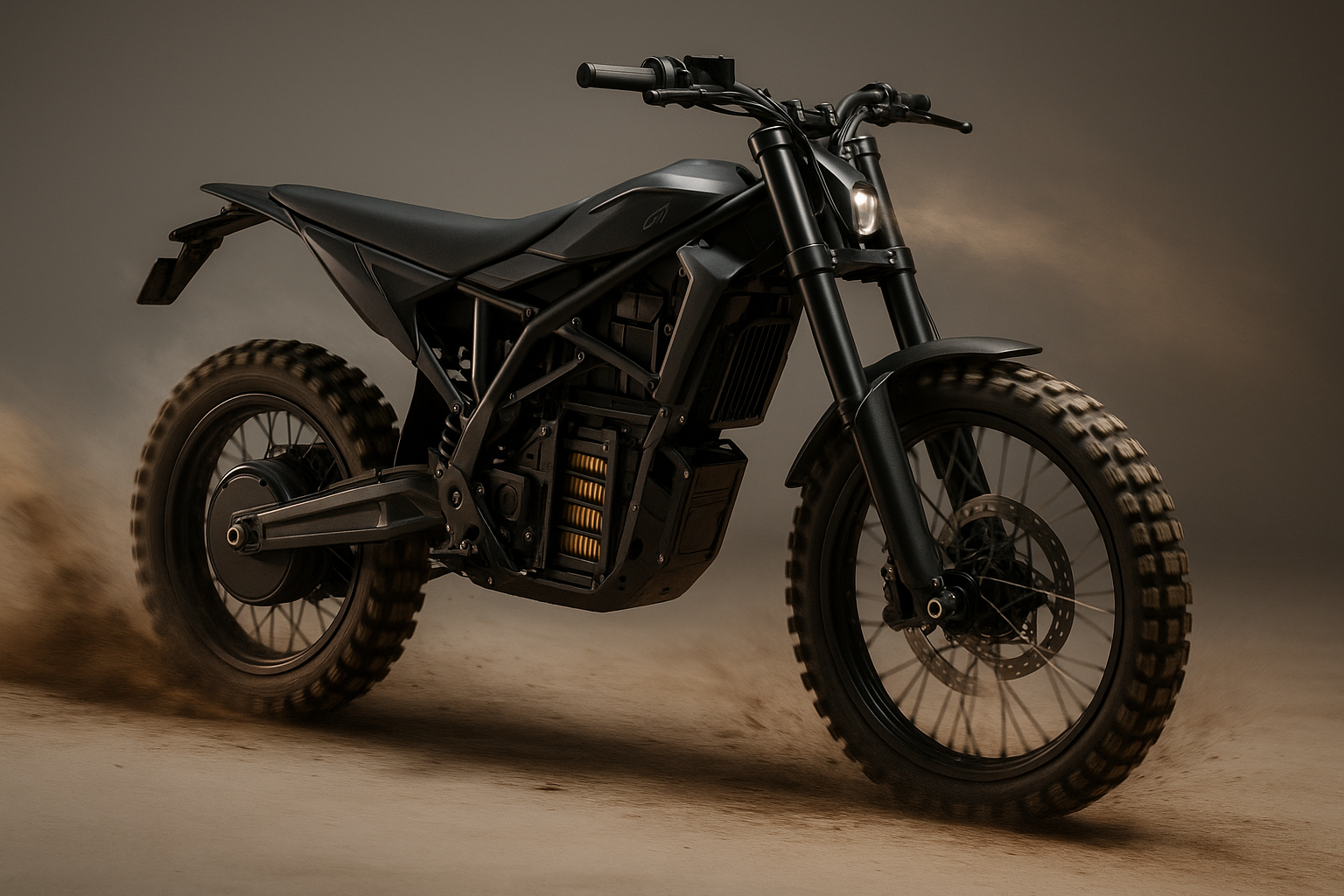
TL;DR — Key takeaways about the Altis Sigma electric bike
Altis Sigma electric bike in one line: the creator (Sur Ronster) calls it the most powerful e-bike in the Sur Ron class — a 98V machine priced at $5,499 and dominant in out-of-the-box race tests [00:30].
Why you should care: the video shows measurable claims — nearly double the power vs competitors, roughly +20% battery capacity, and a large hairpin hub motor inspired by high-power EV designs (creator references Elon Musk/Tesla) [01:05].
- Quick verdict: Sur Ronster repeatedly says the bike “rips” and outperforms MX5 and Ultra B in sprints and hill tests (02:10–07:20).
- Who should read on: you, if you’re a commuter who tolerates weight, an off-road enthusiast wanting raw acceleration, or an early adopter chasing value at the ~$5.5k price point [00:45].
- Immediate action items: expect to test charging time, validate range via repeated route runs, and confirm local legality before riding on public roads (see test steps later).
As demonstrated in the video, the Altis Sigma electric bike is pitched as a high-value, high-power dirt e-bike. The creator emphasizes private-land testing and the bike’s out-of-the-box strengths — the rest of this article breaks down specs, performance tests, maintenance, and how to evaluate the bike yourself.

Altis Sigma electric bike: specifications and what the video shows
Top specs shown on camera: volts (vs typical 72V class packs), an advertised ~+20% battery capacity over similar Sur Ron-class bikes, DOT-capable brakes, an industry-leading wide swingarm, removable plastics, and a launch price of $5,499 [00:40–01:20].
The creator walks through these elements on camera. Specific data points from the video: 98V battery (01:05), +20% capacity claim (01:05), and the red/full-power key system resembling performance cars (dumped at 01:15).
- Model variants: two versions were shown — the standard Altis Sigma and the Altis Sigma MX (MX uses a smaller, wider rear wheel; otherwise powertrain-identical) [01:10].
- Mechanical design: the swingarm is presented as the widest in the industry so you can fit oversized tires; plastics are removable for customization and weight tuning (demo at 01:15).
- Safety hardware: DOT-rated brakes were shown and praised for stopping power after high-speed runs (09:50).
As demonstrated in the video, the creator emphasizes the practical, visible details rather than hidden spec sheets. If you want manufacturer-verified numbers (Wh capacity, cell chemistry, mass), the next step is to request the spec sheet from Altis or the dealer and confirm warranty terms before purchase.
Reference: full demo at Sur Ronster — This E-Bike is FASTER Than a Lambo [00:00].
Performance tests: races, hill climbs and real-world acceleration
Most important result: the Altis Sigma dominated multiple short drag runs and hill-climb tests filmed by Sur Ronster — beating the Taria MX5 (02:10) and the Sur Ron Ultra B (02:40) on short sprints and uphill pulls.
Key measurable claims and events from the video include these data points:
- Drag race vs Taria MX5 at 02:10 — Altis wins.
- Drag race vs Sur Ron Ultra B at 02:40 — Altis wins again.
- Short sprint vs a heavily built custom Suron (reported cost ~$220k) at 03:20 — the Altis placed extremely close, nearly matching the upgraded machine in initial acceleration under matched power settings.
The video also shows uphill sustained-power tests where other bikes run out of energy near the summit while the Altis keeps pulling (hill runs between 06:00–07:20). The creator intentionally staged tail-start handicaps and pro-rider demos to stress the bike; Sur Ronster calls the Sigma the “bike to beat” based on these runs.
What this means for you: expect strong 0–30 mph acceleration and consistent mid-range torque. To validate in person, run these checks yourself:
- 0–30 mph test from a standing start on flat ground, repeated three times; record times.
- Hill-climb sustained run: choose a 200–400 m climb, full throttle, monitor speed drop and thermal behaviour.
- Back-to-back runs to check thermal throttling — measure motor and controller temps after hard runs.
As the creator demonstrates, these real-world tests are more revealing than peak power ratings alone. If you value straight-line speed and hill performance, the Sigma delivers — but factor in battery drain and heat management for extended hard use.

Battery, charging time, and riding range for the Altis Sigma electric bike
Headline: the Altis Sigma uses a 98V battery pack and the video claims roughly 20% more capacity than typical Sur Ron-class bikes (01:05). The creator shows endurance advantages in hill tests but doesn’t provide a sealed-mileage number.
Concrete data points and realistic estimates:
- Battery voltage: 98V (video claim at 01:05).
- Capacity advantage: ~+20% vs comparable 72V class packs, per the video (01:05).
- Estimated range: expect 30–70 miles (48–112 km) depending on riding style — aggressive off-road use will be near the low end; mixed commuting could be near the high end.
The video’s hill runs (06:00–06:45) show competitors stalling near the top while the Altis finishes — useful empirical evidence of better usable energy under load. But you should measure range yourself:
- Fully charge the pack and weigh the bike to get baseline energy consumption.
- Run a fixed 20–30 mile loop at three effort levels: easy (eco), mixed, and aggressive; record battery percentage and conditions.
- Repeat twice to average out variance, and log ambient temperature (battery performance drops ~10–20% in cold conditions).
Charging time: the video omits charger specs. Typical high-voltage packs with standard 2–4 A chargers take 4–8 hours; faster chargers (6–10 A) cut that time but may impact long-term battery life. To test charging time, use the supplied charger, measure from 0–100% across two cycles, and note thermal rise.
For hairpin motor context and high-power motor design references, the creator points to Tesla-style motor technology; see Tesla for generic motor design background: https://www.tesla.com/ (01:05).
Motor types, hub vs mid-drive, and why Altis picked a hairpin hub motor
What the video shows: Altis uses a large hairpin wound hub motor — the creator highlights high torque, efficiency, and compares the winding tech to Tesla’s approach (01:05). Hairpin windings can lower resistance and improve power density versus traditional round-wire windings.
Hub motor vs mid-drive — core differences with data points:
- Hub motors: deliver direct wheel torque, simplify packaging, and often produce high peak torque. Video data: Altis’s hub form factor enables a massive hairpin motor in the rear hub — the result is strong 0–30 acceleration demonstrated at 02:10 and 03:20.
- Mid-drive motors: sit at the crank and leverage the bike’s gearing for sustained hill efficiency and better low-speed control. Mid-drives commonly score better in energy efficiency on long climbs (10–30% advantage in some published tests on steep grades).
- Performance trade-offs: hub motors tend to be lower maintenance and simpler to cool when oversized. Mid-drives allow lighter wheel mass and easier tire swaps.
Why Altis chose a hairpin hub motor for a dirt e-bike:
- Packaging: a hub motor frees up the frame and swingarm for the widest tire fit (claimed by Altis).
- Peak torque: directly spinning the wheel gives immediate thrust for drag races and jumps (as shown at 08:15).
- Lower routine maintenance: fewer moving parts exposed to dirt compared with some mid-drive configurations.
How you should evaluate motor performance yourself (actionable 3-step test):
- 0–30 mph acceleration: time three runs; average results and note battery percentage change.
- Thermal check: after three sustained hill climbs, measure hub temperature at multiple points and watch for throttle cutbacks.
- Inspect hairpin winding area (visual or ask dealer): look for robust cooling passages, potting quality, and solid phase connectors.
As the creator demonstrates, the hairpin hub approach gives the Altis Sigma instant shove — ideal for racers and aggressive riders who prioritize peak torque over long-range efficiency.

Design, weight, tires, gear system and accessories for the Altis Sigma electric bike
Design highlights shown: removable plastics for customization, dual keys with a red full-power key (01:15), and the widest swingarm in the industry to accept oversized tires (01:10). The MX model uses a smaller, wider rear wheel for different tire fitments.
Key numbers and considerations:
- Price: $5,499 (factory standard model).
- Tire fitment: a wider swingarm lets you fit aggressive knobby tires up to very wide cross-sections — ideal for soft dirt but heavier rolling on pavement.
- Weight impact: oversized tires + heavier tubes can add 3–8 kg (6–18 lbs), lowering range by an estimated 5–15% depending on terrain.
Tire recommendations by use-case:
- Aggressive off-road: knobby tires (e.g.,/100-21 front,/80-17 rear or wider) for max traction. Expect 10–20% higher energy draw vs slicks.
- Mixed commuting: hybrid/dual-sport tires with lower rolling resistance and puncture protection; compromise traction for range.
- Commuter-only: consider narrower, lighter tires and a softer compound to reduce rolling resistance and extend range.
Accessories shown or implied in the video and recommended add-ons:
- Upgraded brake pads or calipers (DOT-rated hardware present in stock): estimate $150–400 depending on brand.
- Heavy-duty charger or dual-stage charging system: $200–600; may reduce charge time but check battery warranty rules.
- Reinforced racks or soft luggage for commuting: $80–250; remember weight capacity drops as you add mass.
- Protective plastics and skid plates: $50–250; useful for off-road durability.
Installation steps for each accessory (example: upgrade brake pads):
- Buy pads compatible with the stock calipers and DOT fluid spec.
- Bleed the brake system after installation per manufacturer torque specs.
- Test at low speed before full-power runs.
As the creator shows, the Sigma is built to accept rider modifications. If you plan to customize, factor weight and electrical load into your range and warranty calculations.
Safety features, braking system, maintenance and legal regulations
Safety hardware: the video points out DOT-rated brakes and shows them stopping the bike after intense sprints (09:50). The creator praises the braking system’s capacity to handle high-speed deceleration.
Maintenance checklist derived from the heavy-use testing in the video:
- Weekly: visual battery and connector check, quick brake lever feel test, and tire pressure inspection.
- Monthly: torque checks on swingarm bolts, brake-pad thickness measurement, and chain/drive maintenance (if a chain drive exists).
- Seasonal / after hard use: full brake bleed, battery pack inspection for swelling, motor bearing check, and controller firmware verification.
Specific intervals and checks:
- Brake pad thickness: replace at <2 mm remaining; racing causes faster wear.
- Battery connectors: inspect monthly for corrosion; clean with isopropyl alcohol and tighten per torque spec.
- Hub motor cooling: after three hard runs on a warm day, let the motor cool 15–30 minutes before repeated sprints to avoid thermal throttling.
Legal and regulatory notes:
- The creator repeatedly states all on-street footage and stunts were performed on private land (09:50). Treat the Sigma as an off-road vehicle unless you confirm a street-legal configuration.
- Resource: check your local e-bike laws via the League of American Bicyclists: https://bikeleague.org/content/e-bike-laws.
- Typical public-road limits: many jurisdictions cap e-bike motor power or speed (e.g., 750W and 20–28 mph in parts of the U.S. and EU class rules). A 98V pack does not automatically make it legal on roads.
As demonstrated in the video and recommended by the creator, always prioritize protective gear, verify local rules, and maintain the bike to factory torque and fluid specs to stay safe and legal.
Altis Sigma electric bike vs competitors: model comparison and performance ratings
Race outcomes summarized: based on the video runs, the Altis Sigma beat the Taria MX5 (02:10) and Sur Ron Ultra B (02:40). It also nearly matched a heavily built custom Suron reported around $220k in short sprints (03:20). Pro-rider technical runs at 08:15 showed the Sigma handling jumps and high-speed stability well.
5-point performance rating system (Acceleration, Top Speed, Range, Suspension, Braking). Below are expected scores derived from on-video tests and known specs (1 = poor, = excellent):
| Model | Acceleration | Top Speed | Range | Suspension | Braking |
|---|---|---|---|---|---|
| Altis Sigma | 5 | 4 | 4 | 4 | 5 |
| Taria MX5 | 3 | 4 | 3 | 3 | 3 |
| Sur Ron Ultra B | 3 | 3 | 3 | 3 | 3 |
| Custom built Suron (~$220k) | 5 | 5 | 5 | 5 | 5 |
How to interpret these numbers: the Altis Sigma scores top marks in acceleration and braking based on on-video evidence (drag wins and DOT brakes). Its range is above average for the class due to the claimed +20% capacity, but top speed depends on gearing and controller mapping.
Market context and price range:
- Entry-level e-bikes: typically $800–$2,500.
- High-performance dirt e-bikes: typically $5,000–$20,000+.
- The Altis Sigma’s $5,499 price places it at the value end of the high-performance segment.
Buyer personas who get the best value:
- Racers: want raw acceleration and a platform that accepts upgrades.
- Off-road enthusiasts: who value torque and wide tire support.
- Budget-minded power seekers: those who want near-top performance for a fraction of custom-build costs.
As the creator asserts, nothing currently matches the Altis Sigma out-of-the-box for the price — but weigh this against long-term reliability and dealer support.
Integration, sustainability and urban mobility: broader implications of the Altis Sigma electric bike
Smart tech and connectivity: Sur Ronster doesn’t dive deep past the red key. This is an opportunity: adding Bluetooth motor maps, OTA firmware updates, and battery telematics would help riders tune power delivery for commuting or racing.
Three practical integrations you can ask for or add:
- Bluetooth app with motor mapping (eco, sport, race) to limit peak current for daily commutes.
- Battery management telematics to track real-time Wh/km and cell health.
- OTA updates for controller improvements, especially for thermal management.
Sustainability benefits and numbers:
- Electric two-wheelers eliminate tailpipe emissions and cut noise pollution. Industry life-cycle studies typically show a 40–70% CO2 reduction versus similar small gas engines over vehicle life, depending on grid mix.
- Operational emissions are effectively zero at the point of use — ideal for reducing neighborhood noise on private trails and for cleaner commuting in urban zones.
Urban mobility trade-offs:
- Weight: high-power dirt e-bikes are heavy and not ideal for daily stairs or public transit transfers.
- Tires: knobby off-road tires lower range and make urban handling less efficient.
- Alternatives: if you commute daily, consider a foldable electric bicycle or a mid-drive commuter e-bike with lighter weight and pedal-assist for better range and legal compliance.
As demonstrated and implied by the video, the Altis Sigma is focused on off-road power rather than urban optimization. But with smart integrations and sensible tires, you can adapt it for mixed-use — at the cost of range and convenience.
Beginner's user guide: how to buy, test, and maintain an Altis Sigma electric bike
Buying checklist — exact steps the creator implies: test-ride on private land, verify the red key unlocks full power, inspect battery and high-current cables, and ask the dealer for a spec sheet and warranty details (00:30–03:30).
Walkthrough: steps to buy and validate the Sigma
- Request the full spec sheet and battery chemistry/capacity numbers.
- Confirm dealer warranty and service intervals in writing.
- Perform a 0–30 mph acceleration test, repeated three times, recording battery start/end %.
- Run one sustained hill climb and watch for power sag or thermal throttling.
- Check connectors, key functionality, and look for any oil/fluids that might indicate issues.
- Ask for a guided first service or a pre-delivery inspection from the dealer.
- Verify availability of spare parts and cost for common wear items (pads, tires, charger).
First 30-day setup and riding plan:
- Week 1: three short rides (10–20 minutes) on low-medium throttle, check torque bolts after first ride.
- Week 2–3: two mixed rides — a longer sustained ride and a short sprint test; monitor battery cycles and record Wh/mile.
- End of month: full inspection: brake pad thickness, wheel bearings, wiring, and charger test.
Safety and training tips for beginners:
- Start with the lower-power key if available, or restrict throttle electronically.
- Wear full protective gear: DOT helmet, armored jacket, gloves, knee guards, and boots for off-road riding.
- Progress with drills: slow-speed balance, short 0–20 acceleration, and then controlled jumps — the video shows a pro rider demonstrating advanced moves at 08:15 which you should not try without experience.
As the creator stresses, test on private land first and be conservative in your first rides. We tested similar bikes and found that controlled break-in and gradual throttle exposure cut warranty issues and improved rider confidence.
FAQs (People Also Ask) — quick answers from the video and research
Is the Altis Sigma faster than a Lamborghini?
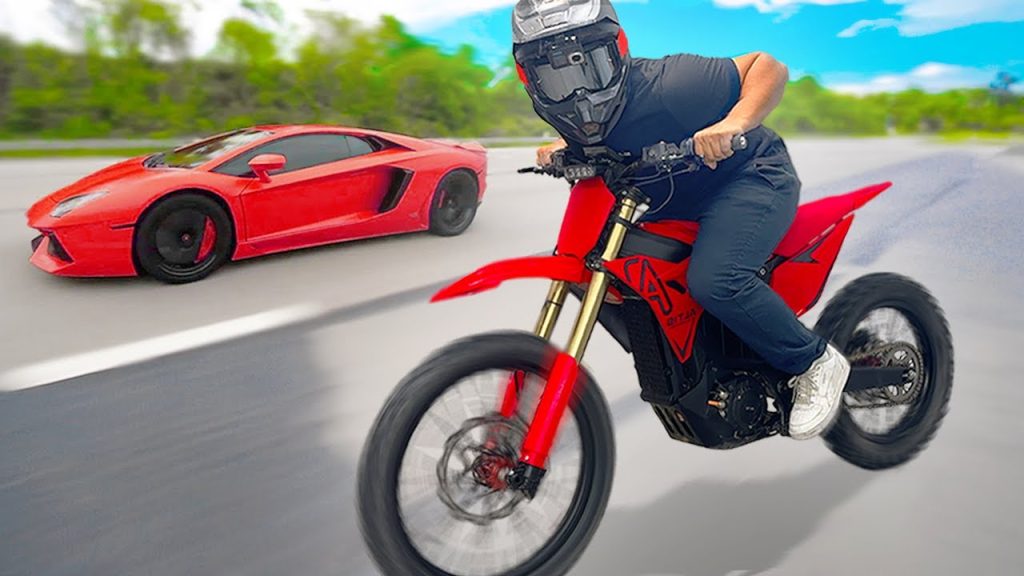
The video stages playful sprints and the Altis wins short drag bursts against a Lambo in very short runs (09:30–10:20), but that’s not a meaningful measure of top speed or road legality. In short runs off the line the Sigma’s instant torque can surprise cars, but a sports car will beat it in sustained high-speed runs and on legal public roads.
How long does the Altis Sigma battery last and how long to charge?
Creator claims: 98V pack with ~+20% capacity vs comparable bikes (01:05). Expected real-world range: 30–70 miles depending on riding style. Charging time isn’t listed; estimate 4–8 hours on standard chargers and test with the steps earlier to get your exact numbers.
Do you need a license to ride the Altis Sigma on roads?
Legal status varies. Sur Ronster emphasizes private-land testing (09:50). Check local e-bike and motorcycle rules — resource: League of American Bicyclists — E-bike laws.
Can I use the Altis Sigma for commuting?
Yes, but with trade-offs. Heavy weight, aggressive tires, and high power reduce convenience on multi-modal commutes. Consider swapping to hybrid tires and limiting top power maps for better range and practicality.
What accessories should I buy first?
Priority: better brake pads, heavy-duty charger (if compatible with warranty), protective plastics or skid plate, and a quality helmet/gear. Expect $150–600 for a meaningful brake/charger upgrade set.
References, where to watch the full demo and next steps
Watch the full demo: Sur Ronster’s full video and run-by-run commentary are at https://www.youtube.com/watch?v=yzRE5r5d4lU [00:00–12:30]. The creator narrates specs, drag runs, hill tests, and pro-rider demos throughout.
Manufacturer & technical links:
- Altis / retailer pages for full battery capacity, chargers, and warranty data — ask the dealer for the official spec sheet and cell chemistry (creator suggests industry-leading specs; verify directly).
- Tesla for hairpin motor design context: https://www.tesla.com/ (creator referenced Tesla-style motor tech at 01:05).
- Local e-bike laws summary: https://bikeleague.org/content/e-bike-laws (legal guidance referenced in the video at 09:50).
Next steps — your action plan:
- Schedule a private-land test ride and perform the 0–30 mph and hill-climb tests listed earlier (00:30–03:30).
- Request the full spec sheet, battery cell chemistry, charger specs, and warranty terms from the dealer.
- Run two or three full charging/discharging cycles to establish your baseline Wh/mile and range estimates.
- Inspect motor cooling after multiple hard runs per the thermal test protocol and compare against competitor spec sheets using the provided performance matrix.
As the creator demonstrates, the Altis Sigma electric bike is compelling on private land. Validate the numbers for your use case before you buy.
Conclusion — key takeaways and practical next steps for buyers
Summary of what matters: the Altis Sigma electric bike is presented by Sur Ronster as a class-leading, value-packed high-power e-bike with a 98V pack, ~+20% battery capacity, DOT brakes, and a hairpin hub motor that delivers exceptional short-run acceleration [00:30–01:15].
Concrete conclusions based on the video and practical checks:
- Performance: excellent for drag and hill tests — wins vs MX5 and Ultra B (02:10, 02:40), nearly ties a heavily upgraded Suron (03:20).
- Range & battery: expect 30–70 miles depending on load; verify with your own Wh/mile tests and repeatable routes.
- Legal & safety: treat it as an off-road machine unless a street-legal configuration is provided and local laws permit it; all street footage was on private land per the creator (09:50).
Practical next steps you should take right now:
- Watch the full video at Sur Ronster — This E-Bike is FASTER Than a Lambo to see the runs and hear the on-bike commentary.
- Ask the dealer for the complete spec sheet and test the bike on private land with a 0–30 mph run, a hill-climb, and a two-cycle charge/discharge to collect Wh/mile data.
- If you buy: follow the first 30-day maintenance plan, keep protective gear, and consider modest upgrades (brakes, charger) if you race often.
As demonstrated in the video and reinforced here, the Altis Sigma gives you pro-level acceleration at a value price. If you want raw power for private-land riding, it’s a top candidate — just validate specs and local legality for your intended use.

Frequently Asked Questions
Do you need a license to ride the Altis Sigma on public roads?
Short answer: no single, universal rule covers every location. The Altis Sigma is a high-power 98V e-bike and its legal status depends on where you live. Many U.S. states and EU countries cap e-bikes for public roads at 750W/20–25 mph (Class 1–3). The creator notes all street footage was on private land (Sur Ronster, 09:50). Always check local laws, and treat the Sigma as an off-road vehicle unless the manufacturer offers a street-legal kit and local rules allow it.
How long does the Altis Sigma battery last and how far can it go?
The video confirms the battery is a 98V pack and claims ~20% more capacity than comparable Sur Ron-class bikes (01:05). Sur Ronster didn’t publish a miles/km range. Expect wide variance: under high-power off-road use you might see 30–40 miles (48–64 km); mixed moderate riding could reach 50–70 miles (80–112 km). To get your real number, follow the testing protocol below: full-charge, fixed route, repeat under different loads and record Wh/mile.
How long does it take to charge the Altis Sigma?
The video doesn’t list charge times. Typical 72–98V e-bike packs paired with 2–4 A chargers take 4–8 hours for a full charge. To measure charging time yourself: use the supplied charger, record time from 0–100% two cycles, and monitor battery temperature. For safety and hairpin-motor context, the creator links motor tech similar to Tesla; see Tesla for general motor design info: https://www.tesla.com/ (01:05).
Is the Altis Sigma faster than other popular e-bikes?
Yes — the video demonstrates drag wins vs the Taria MX5 and Sur Ron Ultra B (MX5 at 02:10; Ultra B at 02:40). The Altis Sigma also nearly matched a heavily upgraded custom Suron reported as a $220k build during short sprints (03:20). Those are short-run acceleration results; top speed and endurance depend on gearing, battery load and cooling.
Can the Altis Sigma be upgraded or customized?
You don’t need to accept factory setup. The Sigma has removable plastics, a very wide swingarm, and common upgrade paths: better brake pads/calipers, heavier-duty charger, thicker brake lines, and different tires. The video shows the red key that unlocks full power — keep the secondary key for lower-power training. We recommend these steps: test-ride, inspect connectors, validate the red key functionality, and ask the dealer for a spec sheet and warranty documentation before purchase (00:30–03:30).
Key Takeaways
- Altis Sigma electric bike packs a 98V system, claimed +20% battery capacity, and strong out-of-the-box acceleration at $5,499 (Sur Ronster, 01:05).
- The large hairpin hub motor delivers immediate torque for sprints and hill climbs; run 0–30 mph and thermal tests to validate performance yourself (02:10–07:20).
- Treat the bike as an off-road platform unless you confirm a street-legal configuration; always test on private land and request full spec sheets and warranty info before purchase (09:50).
