What the Nutraflav video actually shows
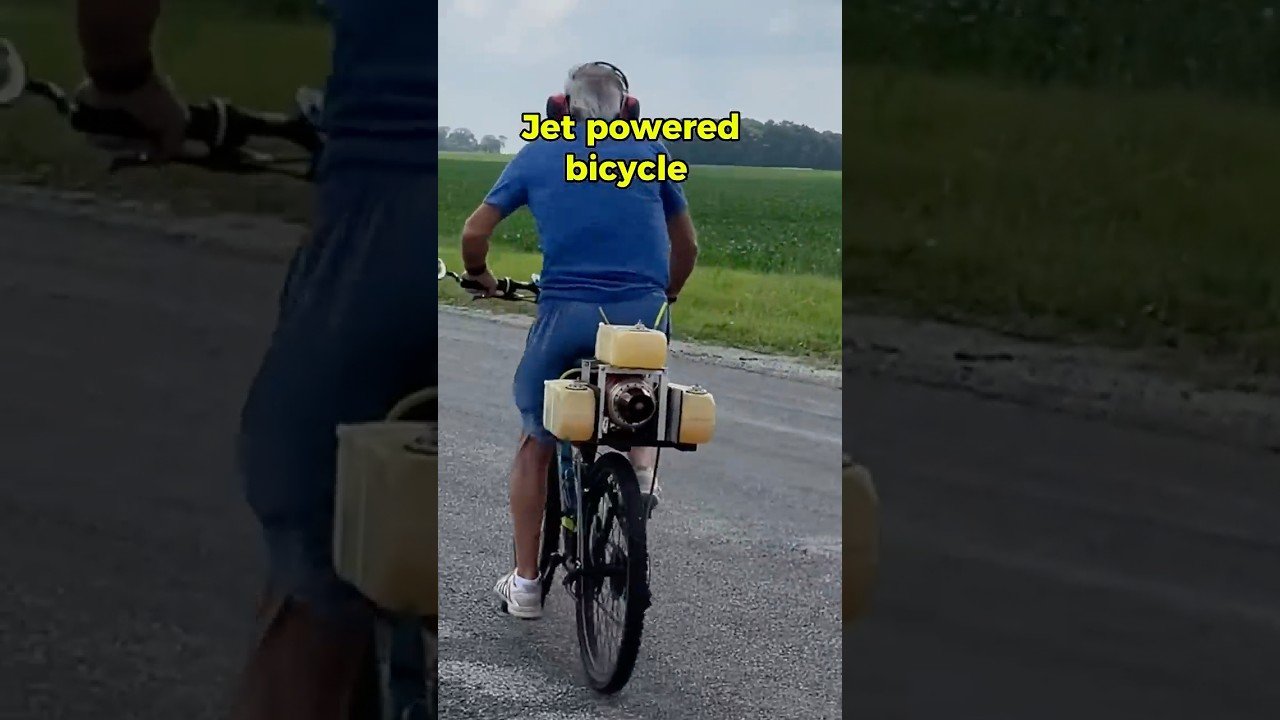
The jet-powered bicycle in Nutraflav’s short YouTube video is striking, but the clip offers only a quick visual observation. At 0:00–0:08, the creator records a machine passing near the house and presents it as a possible alternative to the familiar electric bicycle. You can watch the original video on YouTube.
At 0:08–0:18, Nutraflav reports two headline figures: approximately 90 pounds of thrust and an estimated 70 mph. Those numbers are spoken observations, not independently verified test results. The video shows a brief flyby, but it does not show a calibrated speed test, a scale reading, a braking test, or a technical inspection.
The creator explains what was seen rather than presenting a full build report. That distinction matters. A thrust figure does not automatically prove a road speed, and a fast pass does not prove safe handling. Nutraflav’s audience engagement comes from the dramatic contrast between jet propulsion and ordinary e-bike technology.
For 2026, the sensible conclusion is clear: treat the jet-powered bicycle as an engineering experiment unless its testing, insurance, design limits, and legal status are documented. Before choosing it over an e-bike, compare braking, range, heat, noise, handling, operating cost, and local rules.

TL;DR: jet-powered bicycle claims versus practical e-bike ownership
The short version is simple. Nutraflav reports pounds of thrust and roughly mph, but the 18-second clip does not establish either figure with repeatable testing. There is no measured stopping distance, fuel specification, range test, independent safety inspection, or controlled acceleration data.
A jet-powered bicycle also creates risks that a conventional electric bike usually avoids. These include hot exhaust, extreme noise, fuel ignition, thrust reaction, changing balance, vibration, and much greater braking demands. At mph, a bicycle-sized machine would need components designed for motorcycle-level loads rather than normal pedal-cycle use.
Use this decision rule:
- Commuting: choose a certified commuter e-bike with lights, dependable brakes, and service support.
- Cargo or family riding: choose a cargo e-bike with a stated payload rating and stable handling.
- Trails: choose a mountain e-bike designed for the terrain and approved by the trail authority.
- Experimentation: consider a jet-powered bicycle only with qualified builders, controlled test space, protective equipment, and written permission.
Your comparison should cover motor type, battery capacity, real-world range, hill performance, braking distance, total cost, and regulations. The video shows an exciting possibility; it does not replace those measurements.
How a jet-powered bicycle differs from an electric bicycle
A jet engine creates forward force by accelerating air and exhaust backward. An electric bicycle uses a battery-powered motor to turn either the wheel or the crank. A hub motor sits in the wheel and drives it directly. A mid-drive motor applies power through the chain, cassette, and bicycle gears.
That mechanical difference affects nearly every part of ownership. A hub motor can be simple and quiet compared with a turbine. A mid-drive motor can use low gears to climb more effectively. Neither normally produces the hot exhaust plume, fuel-management concerns, or turbine noise associated with a jet-powered bicycle.
The 90-pound thrust statement also cannot be converted directly into mph. Speed depends on total mass, aerodynamic drag, rolling resistance, tire stability, gearing, available distance, wind, acceleration time, and braking capacity. For example, doubling speed increases aerodynamic drag by about four times at the same air density. The required power rises sharply as well.
| Feature | Jet-powered bicycle | Electric bicycle |
|---|---|---|
| Energy source | Liquid fuel | Rechargeable battery |
| Propulsion | Air and exhaust thrust | Wheel or crank motor |
| Control | Throttle and thrust response | Pedal sensor, torque sensor, or throttle |
| Heat and sound | Very high heat and noise | Low external heat and moderate motor noise |
| Legal category | Unclear; may be motor-vehicle or experimental equipment | Often defined by local e-bike rules |
For basic bicycle safety information, consult the National Highway Traffic Safety Administration bicycle safety materials. They cannot certify a jet-powered bicycle, but they reinforce the need for visibility, helmets, and control.

Electric bicycle options by rider, terrain, and budget
Electric bicycle videos, video reviews, e-bike reviews, and buying guides become more useful when you sort them by the rider’s real needs. Treating every model as interchangeable leads to poor choices. A 500-watt commuter and a long-travel trail bike may both appear in YouTube search results, yet they serve very different purposes.
- Commuter e-bikes: prioritize lights, fenders, rack mounts, upright comfort, puncture-resistant tires, and local service.
- Mountain e-bikes: look for suspension, hydraulic disc brakes, torque-sensitive assistance, strong wheels, and a frame built for repeated impacts.
- Folding e-bikes: suit apartments, trains, and small vehicles, but inspect hinge security and folded weight.
- Cargo e-bikes: need a published payload rating, sturdy wheels, a long wheelbase, powerful brakes, and predictable low-speed balance.
- Fat-tire e-bikes: can help on sand, snow, or loose ground, although wide tires add rolling resistance and weight.
- Step-through e-bikes: make mounting easier and can benefit riders with limited hip or knee movement.
Budget matters, but price alone does not identify the best electric bicycle for the money. Entry-level models may use basic brakes, smaller batteries, or limited support. Mid-range models often balance capacity, reliability, and parts access. Premium bikes may justify higher prices through stronger motors, better warranties, integrated batteries, dealer service, and refined controls.
Compare the warranty length, replacement battery price, component certification, brake design, parts availability, and service network. According to our research, those ownership details often matter more after the first year than a small difference in motor wattage.
Motor systems, battery capacity, range, and hills
A hub motor is often simpler and less expensive. It can work well for flat commuting and steady pavement. A mid-drive motor generally uses the bicycle’s gears more effectively on steep hills, because the rider can select a low gear while the motor operates in a useful speed range. The trade-off is greater wear on the chain, chainring, and cassette.
Battery capacity is measured in watt-hours. Calculate it by multiplying volts by amp-hours: a 48-volt, 15-amp-hour battery has about 720 Wh of nominal capacity. Usable energy is lower because manufacturers reserve some capacity for battery life and protection. A larger pack may extend range, but it also adds weight, cost, and charging time.
Real-world range depends on rider weight, cargo, hills, assist level, temperature, tire pressure, wind, and stop-and-go traffic. A useful test uses the same route, elevation gain, assist setting, rider load, and tire pressure. Record the starting and ending battery percentages, then repeat the route at least twice. Report a range, not one maximum number.
Hill performance cannot be judged by wattage alone. Check torque, gearing, controller limits, motor temperature, battery voltage under load, and rider input. For example, two motors with similar nominal power can feel very different on a long 10% grade. That measured approach contrasts with the jet-powered bicycle’s unverified thrust and speed statements.

How to verify dramatic jet-powered bicycle performance claims
The video’s 90-pound thrust and mph statements should be treated as claims to investigate. Start by identifying who made each statement: the rider, the builder, a manufacturer, a sponsor, or an independent tester. Then ask whether the test conditions are visible and whether another person could repeat the result.
Watch for common weaknesses in sponsored reviews and affiliate content. These include undisclosed compensation, edited speed displays, downhill-only demonstrations, unusually light riders, fresh batteries, tailwinds, and missing braking or failure footage. A dramatic pass can show that a machine moved quickly. It cannot show how safely it accelerates, turns, stops, or survives repeated use.
Google and YouTube personalize content using signals such as watch history, subscriptions, audience engagement, related searches, and viewing behavior. Personalized ads and non-personalized content may appear under different privacy settings. Repeated video recommendations do not prove that a claim is accurate; they may simply reflect your interest in electric bicycle comparisons.
Use this verification checklist before sharing a sensational video recommendation:
- Find the original clip and note the exact timestamp.
- Separate stated facts from estimates and visual impressions.
- Look for independent video reviews with visible test equipment.
- Check manufacturer documents, owner reports, and service records.
- Confirm speed, range, braking, and temperature under controlled conditions.
- Search for recalls, legal restrictions, and insurance requirements.
As demonstrated in the video, a few seconds can create a powerful impression. Good verification takes longer.
Safety risks: speed, braking, batteries, and visibility
A claimed mph would radically change the safety problem. Under comparable conditions, doubling speed requires roughly four times the stopping distance because kinetic energy rises with the square of speed. A bicycle traveling at mph also faces much greater tire, frame, wheel, bearing, and brake loads than a normal e-bike.
Jet propulsion adds hazards of its own: hot exhaust, fuel ignition, hearing damage, thrust-induced instability, vibration, and debris entering the engine. Loose clothing, gravel, dry grass, and bystanders are serious concerns. Any test should occur in a controlled area away from homes, public roads, pedestrians, animals, and flammable materials. A jet-powered bicycle should never be treated like a faster commuter.
For electric bike batteries, use the supplied charger and inspect the pack before charging. Do not charge a swollen, cracked, wet, hot, or damaged battery. Keep charging away from sleeping areas and exits, and follow the manufacturer’s storage temperature guidance. Certified electrical components and reputable repair support reduce, but do not eliminate, fire risk.
Use these riding habits every time:
- Test front and rear brakes before moving.
- Use front and rear lights, even in daylight.
- Wear a properly fitted helmet and increase following distance.
- Reduce speed before corners, intersections, and wet surfaces.
- Lock through the frame with a strong U-lock or hardened chain.
Laws, classifications, and where these machines may be ridden
E-bike law varies by country, state, city, road, park, and trail. In many U.S. jurisdictions, three classifications distinguish pedal assistance, maximum assisted speed, and throttle operation. The exact limits differ, and some locations impose extra rules for high-speed models, throttles, helmets, age, lights, or trail access.
Check the rules in force during rather than assuming that a bicycle label settles the question. Public-road legality is separate from private-property testing. A machine may be permitted on private land yet prohibited on a public trail or roadway. Registration, insurance, reflectors, speed limits, and minimum rider ages may also apply.
A jet-powered bicycle may not qualify as an electric bicycle or ordinary bicycle at all. Its fuel, exhaust, noise, speed, and construction could raise motor-vehicle, fire-code, experimental-vehicle, aviation, or local nuisance questions. The answer depends on the design and location. Nutraflav’s brief flyby does not establish legal approval.
Follow this compliance sequence before riding or demonstrating one:
- Identify the propulsion type, fuel, speed, and operating controls.
- Read the local statutory definition of bicycle, e-bike, motor vehicle, and experimental vehicle.
- Contact the road, park, or trail authority directly.
- Confirm helmet, age, lighting, registration, and insurance requirements.
- Obtain written permission for any public demonstration.
Do not rely on a seller’s statement that a machine is “street legal.” Ask the relevant authority for a written answer.
The real cost of owning an e-bike or experimental bicycle
Purchase price is only the first part of ownership. Add a helmet, lights, lock, charger, rack, fenders, tires, brake pads, drivetrain service, diagnostics, storage, insurance, and eventual battery replacement. A practical budget should also include at least one annual inspection and several wear items.
Battery replacement can become a major expense. Proprietary packs, unusual connectors, discontinued models, and locked software may limit your options. Before buying, ask for the replacement battery price, expected availability, warranty period, charging procedure, and service labor rate. A low-cost bike can become expensive if a replacement pack costs a large share of the original purchase price.
Experimental jet ownership adds turbine or engine maintenance, fuel, heat shielding, custom parts, specialist labor, transport to a legal test site, liability insurance, and possible property or noise restrictions. The impressive headline performance may hide a high cost per operating hour. It may also require tools and expertise that ordinary bicycle shops cannot provide.
Medicare generally does not cover an ordinary recreational e-bike for seniors as a standard benefit. Some qualifying mobility equipment or Medicare Advantage supplemental benefits may differ. Ask your plan directly, explain the medical need, and request the coverage decision in writing. Do not assume that an e-bike is treated like a covered wheelchair or scooter.
Buying checklist and practical alternatives to jet propulsion
A careful buying process protects you from impressive but incomplete demonstrations. Use these steps:
- Define the rider, route, hills, distance, storage, and cargo.
- Select a category such as commuter, mountain, folding, cargo, fat-tire, or step-through.
- Compare hub motor and mid-drive motor behavior on your terrain.
- Calculate battery capacity in watt-hours and estimate a realistic range.
- Inspect tire size, wheel strength, brake type, lights, and payload rating.
- Confirm local road, trail, helmet, throttle, and insurance rules.
- Test ride on a hill and practice emergency braking in a safe area.
- Price replacement batteries, brake pads, tires, chains, and service.
Stay away from bikes with no clear manufacturer, missing battery certifications, exaggerated range, weak mechanical-only brakes on a heavy fast model, unavailable parts, no warranty support, or sellers who refuse an in-person inspection. These warning signs matter more than a polished YouTube presentation.
Do electric bikes charge themselves while pedaling? Usually not. Normal pedaling powers the rider while the motor assists; it does not produce enough surplus energy to recharge the battery meaningfully. Some hub-motor systems use regenerative braking, but recovery is usually modest and the feature is uncommon on many bicycles.
A certified commuter e-bike is the practical daily choice. A mid-drive mountain e-bike suits steep trails, a folding model suits limited storage, and a cargo model suits heavy loads. A jet-powered bicycle belongs in controlled experimentation, not ordinary traffic.
Jet-powered bicycle reality: a practical conclusion
Nutraflav captures a memorable idea: a bicycle-sized machine using jet thrust instead of a familiar electric motor. The creator explains that the machine appeared to produce about pounds of thrust and might reach mph. The video shows a flyby, not a complete performance test.
That distinction should guide your next step. Before believing the jet-powered bicycle can replace an e-bike, demand repeatable data for speed, acceleration, braking, range, heat, noise, stability, and maintenance. Confirm the machine’s legal classification and secure written permission for any public test. A dramatic claim deserves careful evidence.
If you need reliable transport in 2026, compare certified electric bikes by use case. Check motor design, battery capacity, real-world range, hill torque, brakes, service access, replacement parts, and total cost. In our experience, those details determine whether an e-bike remains useful after the novelty fades.
Your action plan is straightforward:
- Watch the original Nutraflav clip and separate observation from measurement.
- Choose an e-bike category that matches your route and rider needs.
- Test braking, hills, fit, and controls before purchasing.
- Review local regulations and battery safety instructions.
- Reserve jet-powered bicycle projects for qualified builders and controlled locations.
The machine is fascinating. For most riders, however, dependable braking, quiet operation, legal access, and affordable service matter more than a spectacular speed estimate.

Key Takeaways
- Nutraflav reports about pounds of thrust and an estimated mph, but the short video provides no independent speed, braking, range, or safety verification.
- Thrust cannot be converted directly into speed; mass, drag, gearing, tires, acceleration distance, and braking capacity all matter.
- For practical transport, compare commuter, mountain, folding, cargo, fat-tire, and step-through e-bikes by terrain, rider, battery capacity, service, and total ownership cost.
- A claimed mph creates a radically different risk profile because comparable stopping distance rises roughly fourfold when speed doubles.
- Treat a jet-powered bicycle as an experimental machine unless its testing, legal status, insurance, and controlled operating procedures are documented.
Frequently Asked Questions
What is the best electric bicycle for the money?
The best value depends on your route, load, terrain, and access to service. Compare warranty length, battery replacement cost, certified electrical parts, brake quality, payload rating, and parts availability instead of judging by purchase price alone.
What e-bikes should you stay away from?
Avoid models with no identifiable manufacturer, unclear battery certification, exaggerated range claims, weak brakes, unavailable replacement parts, no meaningful warranty, or sellers who refuse an inspection. Be cautious when a review shows speed but omits braking, battery condition, and long-term service information.
Does Medicare pay for e-bikes for seniors?
Ordinary recreational e-bikes are generally not a standard Medicare benefit. Some Medicare Advantage plans or qualifying mobility-equipment benefits may differ, so ask your plan directly and request the coverage decision in writing.
Do electric bikes charge themselves while pedaling?
Usually not. Pedaling supplies your effort while the motor assists, so there is normally no meaningful surplus energy for charging. Regenerative braking can recover a modest amount on some hub-motor systems, but it is uncommon on many e-bikes.
Can a jet-powered bicycle legally use public roads?
You cannot assume that it qualifies as a bicycle or legal e-bike. Its fuel, speed, exhaust, noise, and design may trigger motor-vehicle, fire, experimental-vehicle, or other rules, so check with the relevant road and local authorities before any public use.
